Quick Answer: How to Mix Makeup Aesthetics
- Assign each aesthetic to one zone: clean girl for base, Y2K for eyes, maximalist for cheeks and lip
- For hooded eyes, press Y2K shimmer onto the visible lid with eyes open, not into the crease
- Use a serum foundation or tinted moisturizer for the clean girl base layer
- Diffuse frosted shadow above the hood fold so it reads when your eyes are open
- Sweep cream blush upward toward the temple for the maximalist draping effect
- Layer high-shine gloss over a filled lip liner for the Y2K lip finish
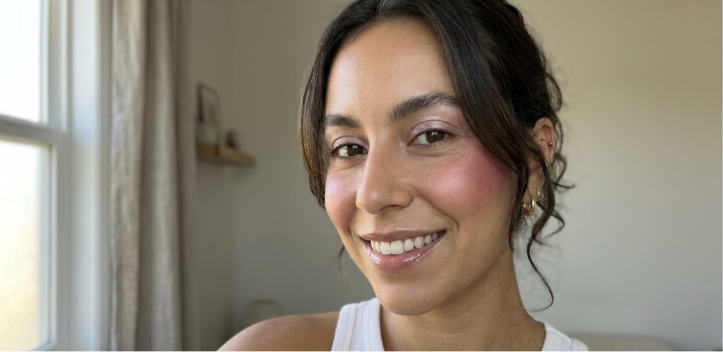
If you’ve been wondering how to mix makeup aesthetics without ending up looking like three separate Pinterest boards collided on your face, this tutorial is for you.
Mixing makeup aesthetics isn’t about breaking rules for the sake of it. It’s about knowing which rules belong to which aesthetic and choosing intentionally which ones you want to follow today.
Y2K makeup interest on TikTok has surged 64.8% year over year. Maximalist makeup is being called the dominant direction heading into 2026. And clean girl isn’t gone. It’s evolved into something more skin-intentional and formula-aware.
Knowing how to mix makeup aesthetics right now means working with three live trends instead of picking a winner and abandoning the other two. This tutorial is built for hooded eyes on medium skin tones.
If you’ve tried mixing makeup aesthetics before and watched frosted shadow vanish the moment you opened your eyes, that’s a placement issue. We’ll solve it in Step 4.
Products for This Look
Getting the products right is part of knowing how to mix makeup aesthetics well. The wrong formula in one zone can undermine every other zone you’ve carefully built.
The clean girl base depends on coverage that doesn’t sit on top of the skin. I’ve been reaching for this serum foundation when I want a skin-visible finish without anything feeling heavy.
[AAWP: Serum foundation / tinted moisturizer, medium coverage, dewy finish]
For the Y2K eye, a single shimmer pan outperforms a full palette when mixing makeup aesthetics at the eye level. You only need one shade pressed onto the visible lid.
[AAWP: Single shimmer eyeshadow pan, pearl or champagne finish]
Cream blush is the product that changes how the entire look comes together. If you’re learning how to mix makeup aesthetics with a maximalist cheek, this is the first product to buy.
[AAWP: Cream blush, buildable finish, berry or terracotta range]
A non-sticky high-shine gloss ties the Y2K element back in at the lip. Modern formulas have eliminated most of the tackiness that made early-2000s glosses hard to wear.
[AAWP: High-shine lip gloss, non-sticky formula, clear or sheer tinted]
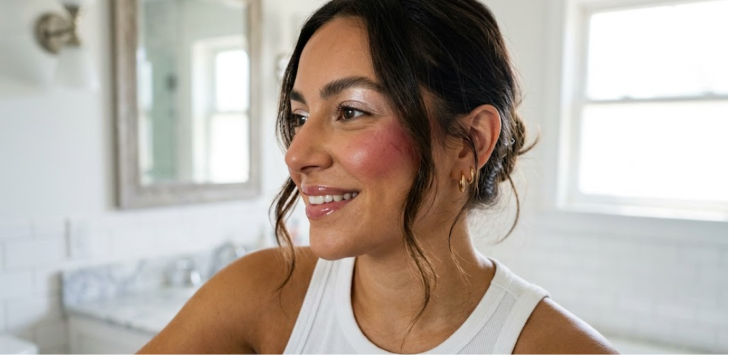
What Mixing Makeup Aesthetics Actually Means
The confusion around how to mix makeup aesthetics usually comes from treating each aesthetic as a full-face directive. It doesn’t have to work that way.
Each aesthetic brings one strength. Mixing makeup aesthetics is about identifying that strength and assigning it a specific zone on your face.
- Clean girl is a skin-first method. Minimal coverage, dewy finish, the kind of base that makes skin look like skin. It’s technically demanding because the skin has to look good underneath.
- Y2K makeup is about frosted texture and playfulness. Shimmer eyeshadow, high-shine gloss, visible liner. The 2000s original was heavy. The current version is precise and wearable.
- Maximalist makeup gives you permission to commit fully to one feature. Bold blush placement, saturated color, a lip that commands the room. It’s about choosing one moment and not walking it back.
When you mix makeup aesthetics with this zone approach, the base belongs to clean girl, the eyes belong to Y2K, and the cheeks and lip belong to maximalist. That’s the core of how to mix makeup aesthetics without losing coherence.
“I also have hooded lids and don’t know how I’m supposed to put on eyeshadow.” — Reddit
This comment surfaces constantly across makeup communities. It points to why mixing these makeup aesthetics gets complicated for hooded eye shapes. Most tutorials are demonstrated on a standard lid with a fully visible crease.
This tutorial shows you how to mix makeup aesthetics with your eyes open, which changes everything about placement:
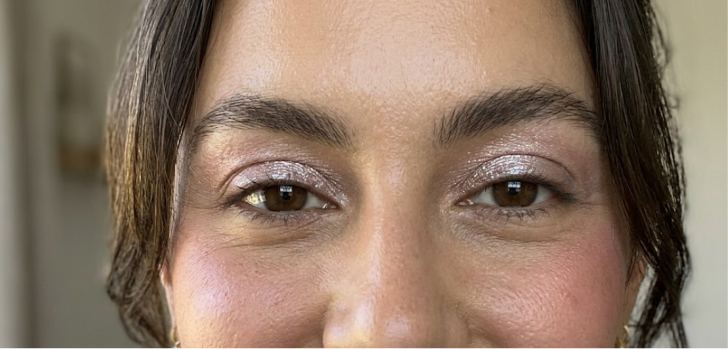
Before You Start: Hooded Eyes and Aesthetic Mixing
Hooded eyes have a fold of skin that lowers over the orbital bone. Your application zone when eyes are open is considerably smaller than what you see with eyes closed.
Shadow placed in the crease disappears behind the fold the moment you open your eyes. That’s the most common reason mixing makeup aesthetics with a Y2K element fails on hooded lids.
The approach is to place everything above where the hood falls, with eyes open. You’ll feel like the placement is too high. It isn’t.
This shifts the Y2K frosted eye portion of mixing these makeup aesthetics considerably. You’ll press shimmer onto the center of the visible lid and diffuse a soft band above the hood so the color reads when your eyes are open.
Anyone learning how to mix makeup aesthetics for hooded eyes should treat open-eye placement as the default, not an adjustment.
How to Mix Makeup Aesthetics: Step-by-Step Tutorial
Step 1: Prep and Base (Clean Girl Aesthetic)
Start with clean, moisturized skin. Apply a lightweight hydrating moisturizer and let it absorb for two minutes.
A primer that matches your skin’s finish goes on next. Dewy if your skin runs dry, balancing if you go oily by midday.
When you’re mixing makeup aesthetics and need the base zone to read correctly, a serum foundation applied with your fingers in pressing motions gives you that skin-visible finish. Build coverage only where you structurally need it.
Check your work in natural lighting at the 30-minute mark. Base formulas shift on skin as they oxidize.
Step 2: Under-Eye and Spot Coverage
Apply a concealer one shade lighter than your foundation under the eye only. Blend it outward in a soft triangle pointing toward the cheek.
Keep it off the lid entirely. Product on the lid creases, and on hooded eyes that creasing makes mixing makeup aesthetics at the eye step significantly harder.
Give everything 60 seconds to settle before moving forward.
Nano Banana Prompt [Close-up, high-definition, GRWM-style portrait of a woman with medium skin tone blending a lightweight concealer under her eye with a small dense brush. The concealer is one shade lighter than her skin, creating a softly brightened triangle below the eye. Her hooded lids are visible and relaxed. Warm vanity lighting. No brand logos or readable product labels in the scene.]
Step 3: Brows
Defined brows are the anchor that keeps a look built from mixing makeup aesthetics from reading as accidental.
Fill gaps with short strokes using a brow pencil that matches your hair, brush through with a spoolie, and set with clear or tinted brow gel. The brow isn’t the statement here. It’s holding space so the other zones can do their job.
Nano Banana Prompt [Close-up, high-definition, GRWM-style portrait of a woman with medium skin tone filling in her brows with a fine-tipped brow pencil using short upward strokes. The brows look defined and natural. Hooded eyes visible, lids relaxed. Soft daylight from a window. No brand logos or product labels visible.]
Step 4: Y2K Frosted Eye, Adapted for Hooded Lids
This is where mixing makeup aesthetics gets most interesting for hooded eyes, and where most Y2K tutorials fall apart for this eye type.
With your eyes open, look directly into the mirror. Identify exactly how much lid is showing. That’s your primary placement zone.
Press a frosted or metallic shadow directly onto the center of the visible lid using your fingertip or a flat shader brush. Pressing, not sweeping. Sweeping disperses shimmer. Pressing deposits it where you need it.
Ice blue, champagne, silver, and pearl are the Y2K standbys here. All four read well on medium skin tones.
Then, with a fluffy blending brush, diffuse the same shade or a slightly deeper version in a soft band just above where the hood sits. With your eyes open, this creates the illusion of a larger lid without the shadow vanishing into the fold.
Mixing makeup aesthetics with a Y2K eye on hooded lids requires this two-zone press. Without it, the frosted moment disappears entirely and the whole point of mixing these makeup aesthetics falls apart at the eye.
“nobody’s instructions matched my face” — AskMetaFilter
Most tutorials that teach how to mix makeup aesthetics don’t account for the hood. This one does.
Step 5: Liner
Thick liner reduces the visible lid space you just built. When you’re mixing these makeup aesthetics, liner does one job: definition without dominance.
Apply a thin line as close to the lash line as possible. Tightlining inside the waterline adds depth without consuming visible lid space.
If you want a wing, keep it short and angled upward. A horizontal wing disappears behind the fold when your eyes are open.
Deep brown or navy liner reads more current than sharp black on medium skin, and it softens the eye zone where the frosted shadow needs room. Getting liner right is part of what makes mixing makeup aesthetics look deliberate.
Step 6: Maximalist Blush Draping
This is the maximalist portion of mixing your makeup aesthetics, and the step that makes the look feel current rather than purely nostalgic.
Blush draping replaces standard apple-of-the-cheek placement. Sweep a cream blush upward from just below the cheekbone, continuing toward the temple and lightly into the lower outer eye area.
On medium skin tones, warm berry and terracotta shades give the most dimension. A rosy peach reads lighter if that’s the direction you want the maximalist moment to take.
Cream blush is the right formula here. It integrates into the skin rather than sitting on top of it, which keeps the clean girl base intact. Powder blush layered over a dewy base separates.
When readers ask how to mix makeup aesthetics without the result looking cluttered, the answer is almost always in the blush placement. Draping is what gives mixing these makeup aesthetics its visual logic.
[Internal Link: /clean-girl-makeup-look/]
Step 7: Y2K Gloss Lip
The lip closes the loop on mixing aesthetics and brings the Y2K element back at the end. It’s also where mixing makeup aesthetics becomes most personalized, because you can adjust intensity here more easily than anywhere else.
Line the lips with a pencil that matches your natural lip tone or goes one shade deeper. Fill in lightly so the gloss has something to anchor to. Then apply a clear or tinted high-shine gloss over the top.
On medium skin tones, a berry-toned liner under a clear gloss sits firmly in Y2K territory. A nude-pink liner under a sheer pink gloss stays closer to clean girl with a glossy finish. Either works when you’re mixing these makeup aesthetics.
Nano Banana Prompt [Close-up, high-definition, GRWM-style portrait of a woman with medium skin tone applying a clear high-shine gloss over a defined berry lip liner. The lips look full and reflective, the liner giving clean definition at the edges and the gloss catching light across the center. Warm vanity lighting. The frosted eye and draped blush from earlier steps are visible in the frame. No brand logos or product labels visible.]
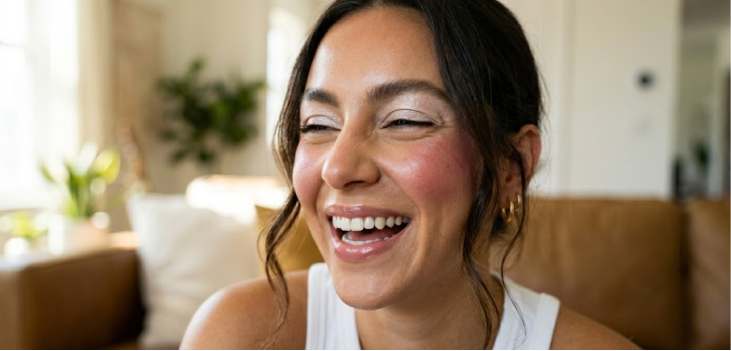
Putting It All Together
Mixing makeup aesthetics works because each aesthetic stays in its zone. The clean girl base keeps the skin readable. The Y2K eye delivers the frosted texture that’s surging heading into 2026. The maximalist cheek and lip give the look a finish that feels committed and current.
For hooded eyes specifically, the biggest shift in learning how to mix makeup aesthetics is placing things higher than feels natural. Once you start applying shadow and liner with your eyes open rather than closed, the whole approach to mixing makeup aesthetics changes. You stop fighting placement and start working with the actual anatomy of your eye.
The combination here isn’t a rigid formula. If the maximalist lip feels like too much one day, dial it back to a tinted balm. If you want more Y2K on the cheek, a subtle highlight on the cheekbone’s high point pulls that aesthetic further into the face. The point of knowing how to mix makeup aesthetics is building enough technique to adjust on your own terms.
Frequently Asked Questions
Is mixing makeup aesthetics something beginners can do? Yes. The zone approach keeps decisions contained. You’re applying one aesthetic per zone, so you’re not juggling everything at once. Start with the clean girl base, follow the Y2K eye steps, and add the blush last.
Does this approach to mixing makeup aesthetics work across all skin tones? This tutorial is built for medium skin tones. If you have fair skin, softer blush tones will work better than deep terracotta. If you have deep skin, the placement and draping technique are the same, but gold and bronze give more payoff than pale pearls. We haven’t tested this combination across every skin tone range, and we want to be upfront about that.
Why does my frosted shadow disappear when I open my eyes? You’re applying it into the crease with eyes closed. The visible zone on hooded eyes sits above the fold. Press shimmer onto the visible lid while looking directly into the mirror.
What’s the difference between blush draping and regular blush? Standard placement sits on the apple of the cheek. Draping sweeps color upward along the cheekbone toward the temple and under the outer eye. It creates a more editorial flush that’s central to why mixing makeup aesthetics with a maximalist element reads as intentional.
Can I wear this during the day? Yes. Reduce blush saturation and swap to a sheer gloss for a work-appropriate version. The frosted eye on hooded lids reads as a soft glow at normal distances.
Does the skill of mixing makeup aesthetics transfer as trends change? Yes. The zone control principle stays the same regardless of which specific aesthetics are trending. The technique you build learning how to mix makeup aesthetics now travels with you as individual trends evolve.
What’s Your Take?
When you’re mixing makeup aesthetics, which zone do you commit to hardest?
- The base. If the skin isn’t right, nothing else holds.
- The eyes. That’s where the personality lives.
- The lip. It’s the last thing on and the first thing people notice.
Why did you vote that way? Drop your take below.