Key Takeaways: How To Apply Bronzer
To apply bronzer the right way:
- Start on a smooth, prepped base
- Load a fluffy brush and tap off the excess before it touches your face
- Sweep in a “3” shape from your temple down to your cheekbone and along your jawline
- Blend in small circular motions after each layer
- Stop before it looks like bronzer
Bronzer is one of those products that looks effortless on everyone else and somehow streaky on you. The issue usually isn’t the product. It’s that most beginner guides skip the things that actually matter: how much product you pick up, where your brush starts, and what “blended” really looks like before you walk out the door.
This guide covers how to apply bronzer from the very beginning, including how to choose a shade that won’t read orange, which formula works for your skin type, and the placement logic that makes the result look like sun, not makeup.
What A Bronzer Does (and Doesn’t Do)
Bronzer adds warmth to the areas of your face where the sun would naturally land. That’s it. It’s not a contour product. It doesn’t reshape your face or create shadows. What it does is make your skin look like you’ve been outside, which is a different goal entirely.
If you want sculpting and shadow, that’s contour. If you want a warm, healthy glow across the high points of your face, that’s bronzer. Knowing the difference keeps you from applying it in the wrong zones and wondering why the result looks muddy.
How to Choose the Right Bronzer Shade
This is where most people go wrong first. A bronzer shade that’s too warm for your undertone will read orange on your skin no matter how well you blend it. The fix isn’t more blending. It’s choosing a better starting shade.
The general rule is to go one to two shades deeper than your natural skin tone, not five. The goal is warmth, not a tan that didn’t exist before.
- For fair skin, look for bronzers with peachy or honey undertones. Neutral and slightly cool-leaning shades also work well. Stay away from anything that looks orange in the pan.
- For light to medium skin, golden and warm brown shades are your best range. These read natural and blend seamlessly into most undertones in this range.
- For tan to olive skin, look for golden-olive or warm amber shades. Avoid anything with a strong red or orange lean. It’ll clash with the green undertones common in olive complexions.
- For deep and very deep skin, rich copper, terracotta, and deep chocolate shades with warm or red undertones are what you want. Shades that are too light will disappear entirely. Matte or semi-matte finishes often work better here than heavy shimmer, which can look ashy instead of warm on deeper skin. This is also an area where testing in natural light matters more than in-store lighting.
A note on testing this honestly: a bronzer that’s been tested on fair to medium skin only can’t tell you how it performs on deep skin. If you have a tan, deep, or very deep complexion and a shade recommendation doesn’t tell you it was tested across your skin tone range, treat it as unverified.
Which Bronzer Formula Works for You
Powder bronzer is the most beginner-friendly option. It’s buildable, forgiving, and easy to blend with a fluffy brush. Works well for oily and combination skin.
If you want a powder bronzer that blends without streaking and holds for 12 hours, the NYX Buttermelt Bronzer is worth grabbing. It comes in eight shades that range from light to very deep, and the matte formula behaves well on most skin types.

- Buttermelt Bronzer: This bronzer powder formula melts into skin delivering a buttered up bronzed finish and silky-smooth skin. 8 buttalicous soft...
- Sun-Kissed Face Makeup: See a sun-soaked bronze all year round & all day long. Buttermelt Bronzer warms up any look for a seamless bronze. Blends...
Last update on 2026-10-20 / Affiliate links / Images from Amazon Product Advertising API
(As an Amazon Associate, we earn from qualifying purchases.)
Cream bronzer gives a more seamless, skin-like finish and it’s great for dry skin because it doesn’t cling to dry patches the way powder can. Apply it with a brush or your fingers and blend quickly before it sets.
For a cream formula, the Milani Cheek Kiss Cream Bronzer has four shades and a soft matte finish that blends with fingers or a brush. It won’t cling to dry patches and it doesn’t pull orange.
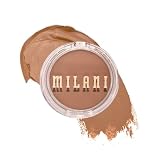
- CREAM BRONZER: Cheek Kiss Cream Bronzer melts onto skin delivering believable warmth and subtle definition without ever looking heavy, streaky...
- FOOL-PROOF APPLICATION: This lightweight cream bronzer builds and blends effortlessly for a smooth finish, making it easy to apply with fingers...
Last update on 2026-10-20 / Affiliate links / Images from Amazon Product Advertising API
(As an Amazon Associate, we earn from qualifying purchases.)
Liquid bronzer delivers the most natural-looking warmth. It’s best layered under powder or mixed into a tinted moisturizer. Dispense a small amount on the back of your hand first and pick it up with a brush — this keeps you from applying too much at once.
The e.l.f. Camo Liquid Bronzer works well here. It comes in 10 shades, has a built-in doe-foot applicator for easy placement, and blends out to a natural finish with a brush or your fingers.

- SCULPTED, SUN-KISSED GLOW: This highly pigmented liquid bronzer and contour delivers a natural bronzed glow with definition for a sculpted beat.
- SMOOTH, LONG-LASTING FINISH: The silky contour makeup blends seamlessly into skin for a natural-looking finish that lasts all day.
Last update on 2026-10-20 / Affiliate links / Images from Amazon Product Advertising API
(As an Amazon Associate, we earn from qualifying purchases.)
Shimmer vs. matte: Matte bronzer is the safest starting point for everyday wear. Shimmer reads as more obvious and works better for evening or photos. If you’re new to bronzer, start matte and add shimmer later if you want more dimension.

Tools You’ll Need
The right tool makes all the difference. Here are the usual tools for the proper application of bronzers:
- Fluffy angled brush: For soft, diffused application.
- Kabuki brush: Delivers more pigment if you want a bolder look.
- Damp sponge: Great for blending cream bronzer seamlessly.
Pro tip: Always shake off excess powder before applying. Too much product on the brush is the quickest route to unsightly streaks.
The Real Techniques Ultra Plush Powder Brush checks every box: large domed head, long loose bristles, and soft enough that you won’t deposit too much product in one stroke.
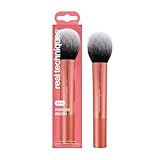
- Powder Brush - Real Techniques Powder Brush (RT201) is a large, domed bronzer, setting powder or blush brush designed for smooth, allover powder...
- Domed Brush Head - Large, domed setting brush evenly applies bronzer, loose powder and pressed setting powder across the face for a soft...
Last update on 2026-10-20 / Affiliate links / Images from Amazon Product Advertising API
(As an Amazon Associate, we earn from qualifying purchases.)
Step-by-Step: How to Apply Bronzer
Step 1: Start on a Smooth Base
To apply bronzer, start by applying your foundation, tinted moisturizer, or any base product first. Bronzer blends more evenly over a prepped surface than it does on bare skin. If you’re having a no-foundation day, a light layer of moisturizer is enough prep for cream bronzer.
Step 2: Tap Off Excess Product
Load your brush into the bronzer and tap the handle firmly against your palm two or three times before it touches your face. This is the step most beginners skip, and it’s the reason most beginners end up with streaks. Starting with too much product means you’re blending a mistake instead of building a glow.
Step 3: Apply Bronzer with the “3” Technique
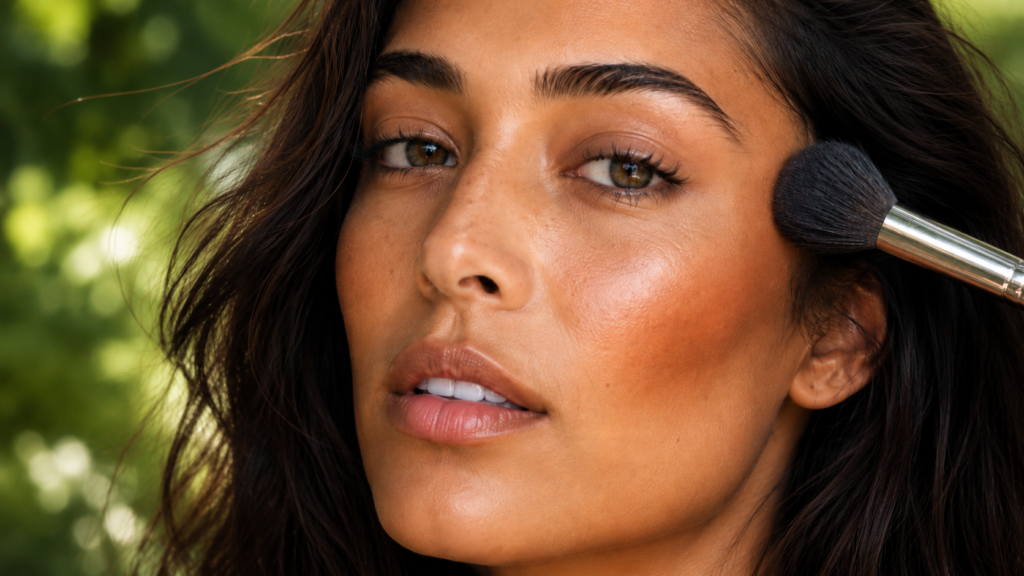
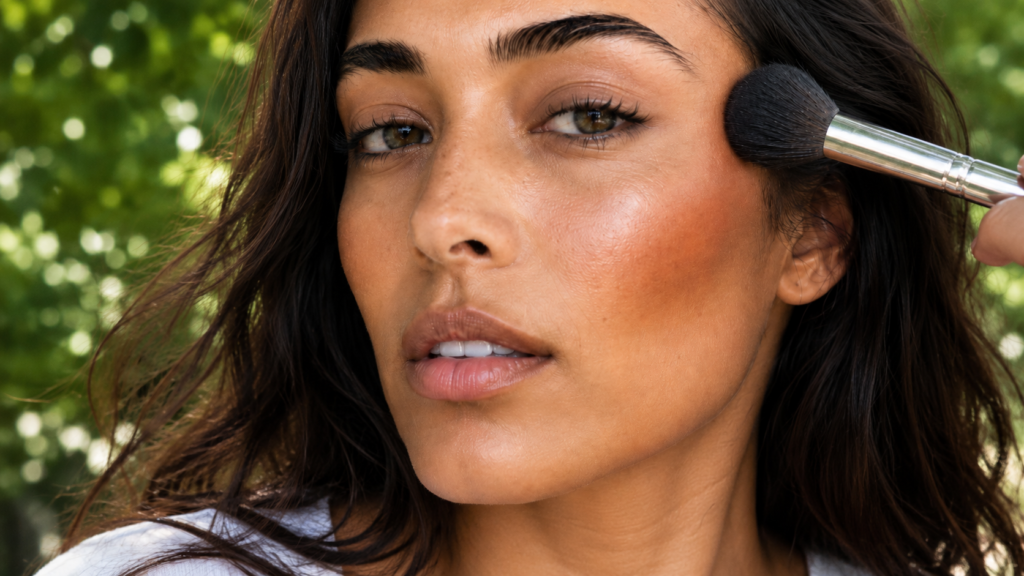
Apply bronzer by starting at your temple, sweep the brush down to your cheekbone and then curve it gently along your jawline. This traces a number “3” on each side of your face and hits the three zones where sun would naturally warm your skin: hairline, cheek, and jaw.
Keep the pressure light. You’re dusting, not pressing. The color should look subtle after the first pass. You’ll build from there.
The e.l.f. Primer-Infused Bronzer in Sun-Soaked is a reliable everyday pick. It’s buildable, matte, and the primer base helps it grip to skin so it doesn’t fade midday.

- ALL-DAY WEAR: This long-lasting, primer and powder bronzer gives you a full day of bronzed, sun-kissed glow that lasts.
- LIGHTWEIGHT & BUILDABLE: This bronzer's formula blends and builds pigment with ease and weightlessly adheres to skin to give you a matte finish.
Last update on 2026-10-20 / Affiliate links / Images from Amazon Product Advertising API
(As an Amazon Associate, we earn from qualifying purchases.)
Step 4: Blend in Circular Motions
Without adding more product, use small circular motions to work the bronzer into your skin at every zone you applied it. Pay attention to the edges at the hairline and jawline — those are where harsh lines show up most. The color should fade seamlessly into your skin, not stop abruptly.
If you can see a clear line where the bronzer ends, keep blending.
If you want a bit more glow in your blend, the e.l.f. Luminous Putty Bronzer melts into skin like a cream but finishes like a powder. Good for dry skin and anyone who finds straight powder bronzer a little flat.

- BRONZER FOR RADIANT GLOW: Talk about a glow up: your favorite Putty Bronzer is now available in a radiant finish! The creamy putty-to-powder...
- HIGHLY-PIGMENTED FORMULA: The formula is lightweight, non-greasy, and highly pigmented to smooth your complexion and impart a summer glow all...
Last update on 2026-10-20 / Affiliate links / Images from Amazon Product Advertising API
(As an Amazon Associate, we earn from qualifying purchases.)
Step 5: Build If You Want More
Check your work in natural light before you apply bronzer. Artificial light indoors reads differently than daylight and you can easily over-apply if you’re only checking in bathroom lighting. If you want more warmth after checking, go back in with a lightly loaded brush and layer.
Optional Zones to Apply Bronzer
Nose bridge: A light pass across the nose adds a freckled, sun-touched effect. Use a smaller brush and keep it very light.
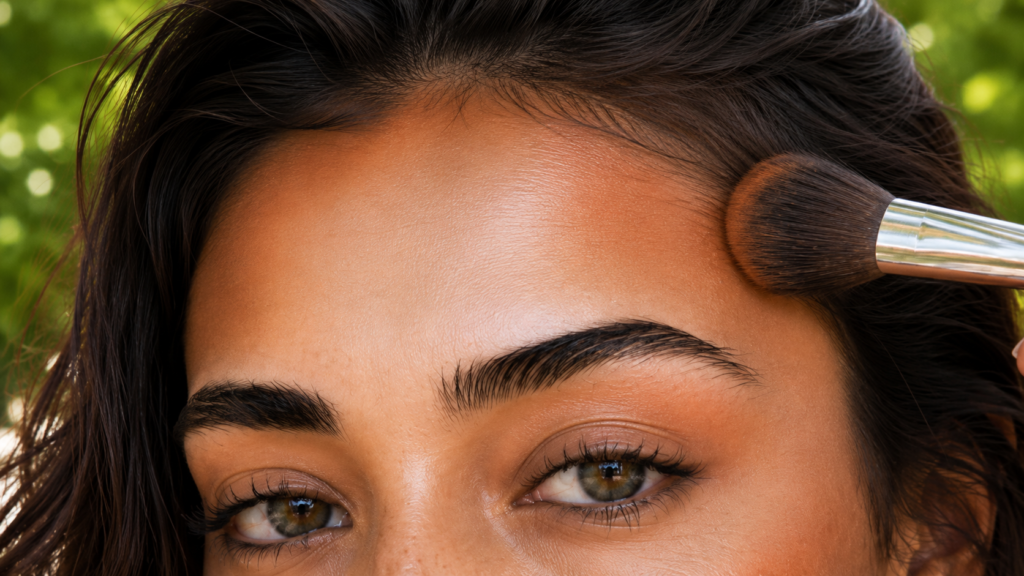
Forehead perimeter: Sweeping bronzer along the outer edge of the forehead and into the hairline gives the look of an all-day glow without making the whole forehead look flat.
Neck and ears: If you’ve applied a fair amount to your face, add a light dusting to your neck and ears so your face and neck don’t look like two different skin tones.
Common Mistakes on How To Apply Bronzer
Even with the best bronzer shade, it’s easy to get streaky in a swipe. Luckily, most bronzer blunders are quick to fix once you know what to look for.
- It looks orange. Your shade is too warm for your undertone. Switch to a bronzer with a more neutral or olive-based tone. Orange reads fake on most skin tones because natural sun warmth leans golden, not red.
- It’s streaky. You started with too much product on the brush. Next time, tap off more before you touch your face. For streaks that are already there, use a clean fluffy brush in circular motions to diffuse them — adding more product won’t fix it.
- It disappeared. Either your shade is too light for your skin tone, or your skin’s natural oils have absorbed it. Try a shade or two deeper. If wear is the issue, a light dusting of setting powder before bronzer gives it something to grip.
- It looks muddy. This usually happens when bronzer and foundation undertones don’t work together, or when bronzer is applied too heavily in the under-eye zone. Keep bronzer on the high points — cheekbones, temples, jaw — and away from the center of your face and under your eyes.
- It looks flat. Bronzer alone reads one-dimensional. Adding a small amount of blush over the top of the cheekbones gives your skin more dimension. Apply blush higher than your bronzer, closer to the cheekbone, so the two don’t compete.
Bronzing Made Simple
Mastering how to apply bronzer isn’t about memorizing rules; it’s about understanding placement, shade, and blending. With the right tools and a little practice, bronzer becomes the fastest way to look fresh, confident, and effortlessly glowing.
Tell us what you think: Do you prefer a subtle everyday bronze or a full glam glow?
Frequently Asked Questions on How To Apply Bronzer
Do I apply bronzer before or after blush?
Bronzer first, blush second. Apply bronzer to your temples, cheekbones, and jaw. Then place blush on the cheekbones slightly higher. Layering in this order gives you the most control over where each product sits.
What’s the difference between bronzer and contour?
To apply bronzer adds warmth across the high points of your face where the sun would naturally hit. Whereas to apply contour adds shadow in the recessed areas to create structure. They do different things and sit in different zones. You can use both, but they’re not interchangeable.
Can I use bronzer without foundation?
Yes. Cream bronzer especially works well on bare skin. Warm it up with your fingertips and press it into the skin rather than sweeping. Powder bronzer also works on bare skin — just make sure your skin is moisturized first so the powder doesn’t cling to dry patches.
How do I know if my bronzer shade is right for my skin tone?
Test it on your jawline in natural light, not in-store lighting. The shade should add warmth without changing your skin color dramatically. If it reads orange or muddy on your jaw, it’s not the right undertone for you.
How much bronzer is too much?
If you can see where it starts and ends, you’ve applied too much. The finished look should make your skin look warmer overall, not like a product is sitting on top of it. Start with one light sweep and build from there — it’s much easier to add than to take away.
Can people with deep skin tones use bronzer?
Yes, and the technique is the same. The key difference is shade selection. Bronzers designed for fair to medium skin won’t read on deep skin — look for shades explicitly developed for deeper complexions, with rich copper, terracotta, or warm chocolate undertones and enough pigment payoff to show up. Semi-matte or satin finishes tend to work better than heavy shimmer on deep skin, which can look ashy rather than warm.