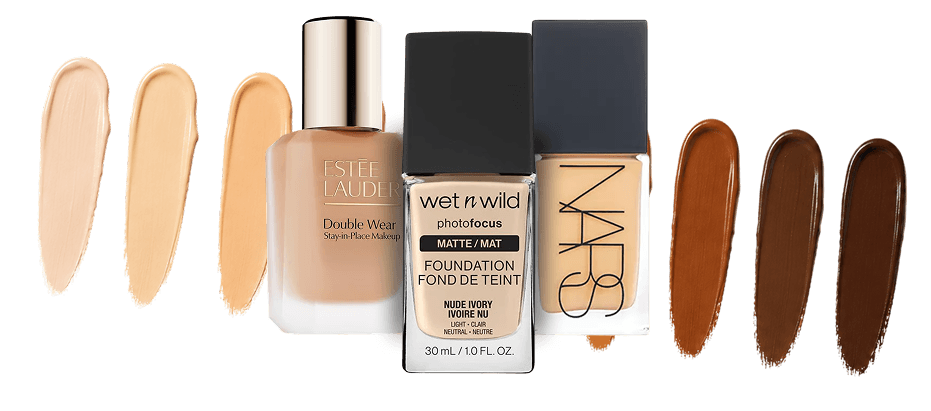

How to Apply Foundation for Beginners: Quick Summary
- Apply foundation on clean, moisturized skin using a damp beauty sponge or foundation brush
- Start in the center of the face and blend outward for the most natural finish
- Use thin layers and build coverage only where needed
- Blend into the jawline and neck to avoid harsh lines
- Total time to apply foundation for beginners is 5 to 10 minutes
Learning how to apply foundation is one of the first and most important steps in makeup. Foundation helps even out skin tone, smooth the look of the skin, and create a base for the rest of your makeup. If you are a complete beginner, foundation application can feel confusing at first. How much should you use? What tool is best? Where do you start?
This guide is designed for absolute beginners who want a clear and simple way to apply foundation. You do not need professional skills or expensive tools. By the end of this tutorial, you will know how to apply foundation step by step and feel confident doing it on your own.
What You Need to Apply Foundation
Essential
- Foundation matched to your skin tone
- Beauty sponge or foundation brush
- Mirror with good lighting, natural light if possible
Optional but Helpful
- Moisturizer
- Primer
- Setting powder
- Color corrector for redness or dark circles
How to Apply Foundation: Step-by-Step for a Flawless Finish
Skip a step, and the products won’t sit right. Let’s break down the steps on how to apply foundation to avoid patchy surprises and cakey regrets.
Step 1: Prep Your Skin

What to do:
Start with a clean face. Wash your skin and gently pat it dry. Apply a moisturizer and let it absorb fully. If you use primer, apply a thin layer after moisturizing.
Beginner tip:
Foundation sticks to dry patches. Well moisturized skin helps foundation look smooth and natural.
Step 2: Choose Your Tool

What to do:
Decide how you want to apply foundation.
- A beauty sponge gives a soft, natural finish
- A foundation brush gives more coverage
- Fingers can work but blending takes more effort
Beginner tip:
A damp sponge is the easiest option when learning how to apply foundation for the first time.
Step 3: Apply Foundation to the Center of the Face

What to do:
Place small dots of foundation on your nose, cheeks, chin, and forehead. This is where most redness and discoloration usually appear.
Beginner tip:
Start with a small amount. Using too much foundation at once is the most common beginner mistake.
Step 4: Blend Outward

What to do:
Blend the foundation outward from the center of your face using gentle tapping or sweeping motions. Work slowly and evenly.
Beginner tip:
Always blend outward. This prevents heavy buildup around the nose and mouth.
Step 5: Build Coverage Where Needed

What to do:
If you still see redness or uneven areas, add a small amount of foundation only to those spots. Blend again.
Beginner tip:
Thin layers look more natural than one thick layer of foundation makeup.
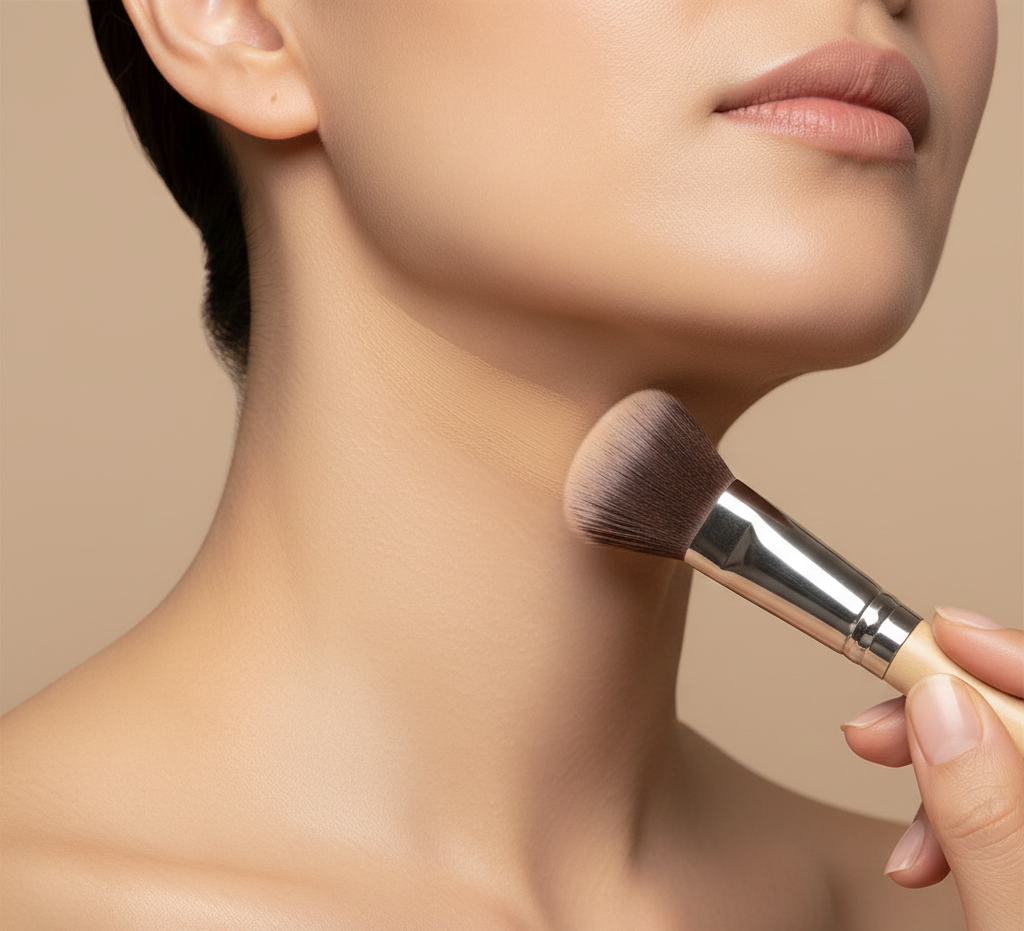
Step 6: Blend the Jawline and Neck
What to do:
Lightly blend foundation along your jawline and slightly down your neck.
Beginner tip:
This step helps your face and neck match and avoids visible foundation lines.
Step 7: Set with Powder

What to do:
If your skin gets oily or you want your foundation to last longer, apply a light layer of setting powder to the forehead, nose, and chin.
Beginner tip:
Too much powder can make foundation look dry. Use a small amount.
Common Foundation Mistakes to Avoid
- Not matching foundation to the neck
This happens when foundation is tested on the hand. Always check the shade along the jawline. - Applying too much product at once
Many beginners use too much foundation. Start small and build coverage slowly. - Skipping primer
Primer helps foundation apply smoothly and last longer. It is especially helpful for beginners. - Using the wrong tool for the formula
Liquid foundation works best with a sponge or brush. Thick formulas are harder to blend with fingers.
How to Apply Foundation Based on Skin Type
Dry Skin
Use a hydrating moisturizer and primer. Apply foundation with a damp sponge. Use little to no powder.
Oily Skin
Use a mattifying primer. Apply foundation with a brush for better control. Set with powder, especially in the T zone.
Combination Skin
Use primer all over the face. Apply powder only where the skin gets oily, usually the forehead, nose, and chin.
Final Thoughts
Learning how to apply foundation does not have to be difficult. With the right prep, the right tool, and a small amount of product, anyone can achieve a smooth and natural finish.
Take your time, blend well, and remember that practice makes the process easier every time you apply foundation.
Frequently Asked Questions: How To Apply Foundation
Should I apply foundation with a brush or sponge?
Both work well, but a sponge is easier for beginners and gives a softer finish.
How do I know if my foundation is the right shade?
The right shade blends into your jawline and neck without looking lighter or darker.
Do I need to set foundation with powder?
Powder is optional. Use it if your skin gets oily or you want longer wear.
Can I apply foundation with my fingers?
Yes, but blending can be uneven. Tools usually give better results.
How much foundation should I use?
Start with a pea sized amount. Add more only if needed.
Should I apply concealer before or after foundation?
Apply foundation first, then use concealer only where you need extra coverage. This helps you use less product and keeps makeup looking natural.
Why does my foundation look cakey after I apply it?
Cakey foundation usually comes from using too much product or applying it on dry skin. Use thinner layers and make sure your skin is well moisturized before foundation application.