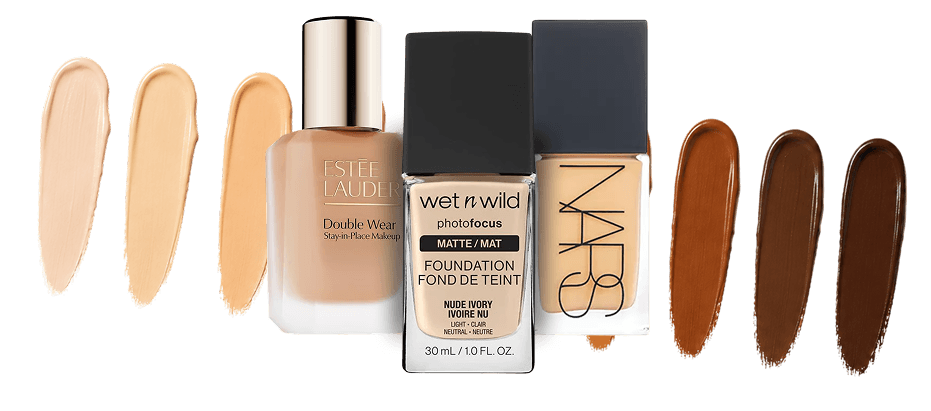
Quick Answer: Dewy Makeup For Oily Skin
Can oily skin pull off dewy makeup?
- Yes, but not with the same formulas used on dry or normal skin.
- Choose oil-free, humectant-based foundations with glycerin or hyaluronic acid rather than squalane or esters.
- Apply dewy products only to the high planes of your face: cheekbones, brow bone, inner corners.
- Mattify the T-zone before any luminous products go on.
- Done in that sequence, dewy makeup for oily skin holds 6 to 8 hours without turning greasy.

Oily skin already produces a natural shine. Your sebaceous glands are working whether you want them to be or not.
So the problem isn’t that you can’t get a dewy look. It’s that most dewy makeup tutorials are written for skin that needs help getting there.
The standard advice is to load up a luminous foundation, layer a glow serum underneath, and finish with a highlight. On dry skin, that works. On oily skin, it stacks shine on top of shine, and by hour two the look has gone greasy.
Dewy makeup for oily skin requires a different approach: prep that regulates sebum before anything goes on, formulas chosen for compatibility with an active oil layer, and glow placed only where it reads as intentional. These seven steps cover all of it.
Why Dewy Makeup Breaks Down on Oily Skin
Most dewy makeup for oily skin attempts fail because of formula chemistry, not technique.
Dewy foundations built on emollient ingredients like squalane, fatty esters, and facial oils are designed for skin that doesn’t produce much moisture on its own. When you apply those formulas on top of an already-active oil layer, they don’t create a glow. They amplify what’s already there.
Humectant-based formulas with glycerin and hyaluronic acid listed early in the ingredients reflect light without adding oil. That single distinction is the ingredient decision that determines whether your dewy makeup for oily skin holds through the day.
One note on skin tone: dewy-finish formulas don’t behave the same way across all skin tones. Oxidation tends to be more pronounced on tan and deep skin, and the finish can shift too. The recommendations here are based on limited skin tone testing. Check your foundation’s behavior at the 30-minute mark before committing to a full day of wear.
“You’re probably all too familiar with your matte foundation transforming into a dewy one despite how hard you worked for your desired finish.” — beauty community forum
Dewy makeup for oily skin is a placement decision as much as a product decision. The steps below address both.
Step-by-Step: Dewy Makeup for Oily Skin
Follow these seven steps in order. The sequence matters as much as the products you use.
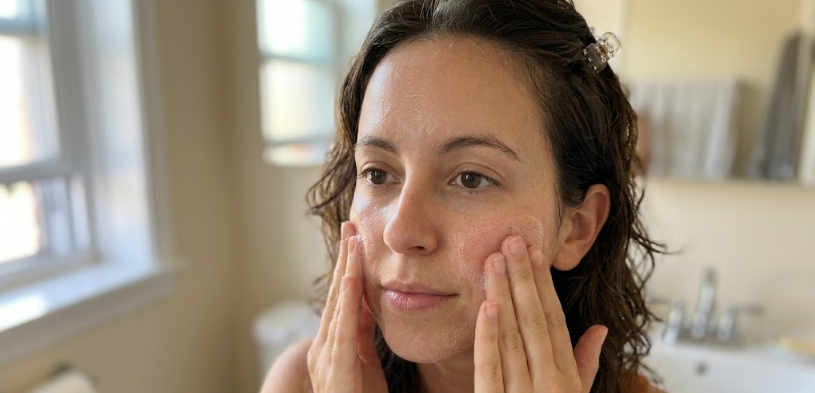
Step 1: Prep Your Skin to Regulate, Not Just Hydrate
Good dewy makeup for oily skin starts before any makeup goes on. This step sets the chemical conditions everything above it will sit in.
- Cleanse with an oil-free gel formula. Cream cleansers leave an emollient residue that interacts poorly with luminous foundation. Getting this right matters because the residue issue affects everything that comes after.
- Apply a lightweight gel moisturizer with niacinamide. Niacinamide moderates sebum production, which changes the conditions every product layered above it will sit in. For dewy makeup that lasts on oily skin, this is the prep step that does the most work.
- Follow with a gel or fluid SPF. A balm-textured SPF creates the same emollient-stacking problem as a cream cleanser and gives the foundation a slippery base that accelerates breakdown.
Skipping moisturizer to control oil is the most common prep mistake in a dewy makeup for oily skin routine. Skin reads dehydration as a problem and increases sebum production to compensate.
“Skipping hydration can make your skin overproduce oil and lead to more shine.” — celebrity makeup artist, Glamour
Dewy Makeup Prep Kit
Getting the base right starts before any makeup goes on. Here’s everything you need for a prep routine that actually controls oil:
Table could not be displayed.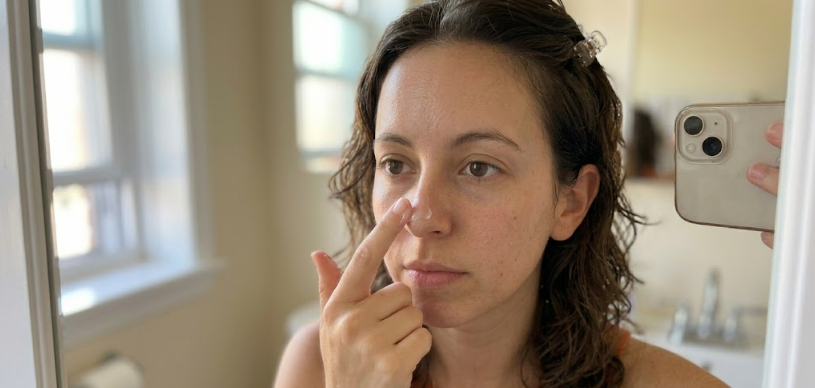
Step 2: Prime the T-Zone Only
Most tutorials tell you to prime your whole face. For dewy makeup on oily skin, that’s the wrong move.
- Apply a mattifying or pore-blurring primer on your forehead, nose, and chin only. Press it in with a fingertip rather than buffing it across a wider area.
- Leave your cheeks bare, or apply a lightweight hydrating primer there only. Mattifying primer across the whole face removes the base luminosity the cheeks need. The T-zone gets controlled; the cheeks stay ready to carry the glow.
Applying mattifying primer everywhere is one of the most common reasons dewy makeup for oily skin fails before the foundation even goes on.
“Use a mattifying or pore-blurring primer after your skincare, but just in the areas you need it. I love targeting the T-zone instead of applying primer all over.” — celebrity makeup artist, Glamour
No products found.
(As an Amazon Associate, we earn from qualifying purchases.)
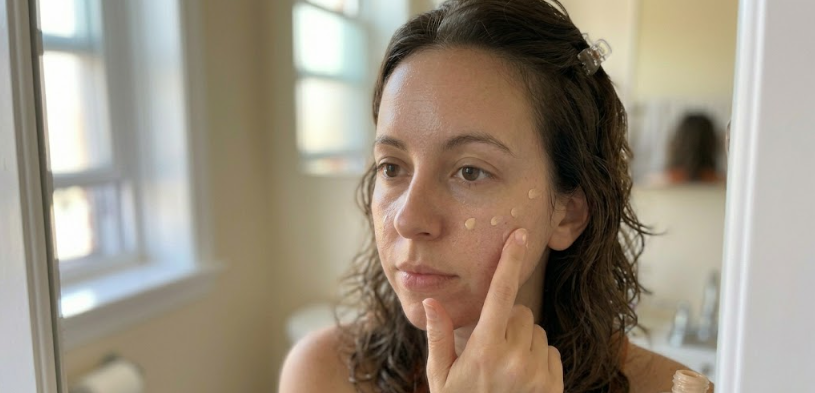
Step 3: Choose a Foundation That Reflects Without Adding Oil
This is the product decision with the highest failure rate in dewy makeup for oily skin routines. It comes down to reading the right part of the label.
- Reach for a skin tint, serum foundation, or luminous-finish oil-free foundation. These let your skin’s natural luminosity pass through the coverage rather than sealing it underneath. They’re light enough that the skin can breathe, which delays the point where oil breaks through.
- Check the ingredients before you buy. Look for glycerin and hyaluronic acid listed among the first several ingredients. These humectants reflect light without adding oil. Squalane, heavy esters, and facial oils listed early are excellent for dry skin but compound what an oily base is already producing.
“Skin tints, tinted moisturizers, and serum foundations are the best base products for glowy makeup because they allow natural skin texture and light to pass through.” — Live Tinted, April 2026
“Everyone can have a dewy, glowing finish, even oily skin. Opt for a soft matte or luminous finish foundation over a primer.” — makeup artist, Marie Claire, October 2025
No products found.
(As an Amazon Associate, we earn from qualifying purchases.)
Step 4: Apply in Thin Layers
The instinct with oily skin is to apply more product for better coverage. For dewy makeup that lasts, the opposite approach works better.
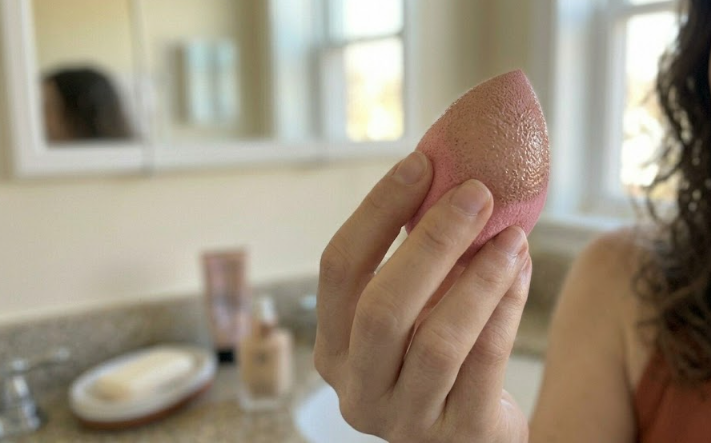
- Use a damp Beauty Blender rather than a brush. The damp sponge absorbs more product than it deposits, which naturally limits how much goes on. Less foundation on oily skin is consistently the better call for how to make oily skin look dewy.
No products found.
(As an Amazon Associate, we earn from qualifying purchases.)
- Build coverage only where you need it. On blemishes and uneven patches, go slightly heavier. Everywhere else, keep it sheer. The more product on the skin, the more surface area sebum has to interact with, and the faster the look shifts.
Thin layers that breathe last longer on oily skin than thick layers that trap sebum underneath them.
Step 5: Set the T-Zone and Leave the Cheeks Alone
Setting powder is not a full-face product for dewy makeup on oily skin. Placement here makes or breaks the whole look.
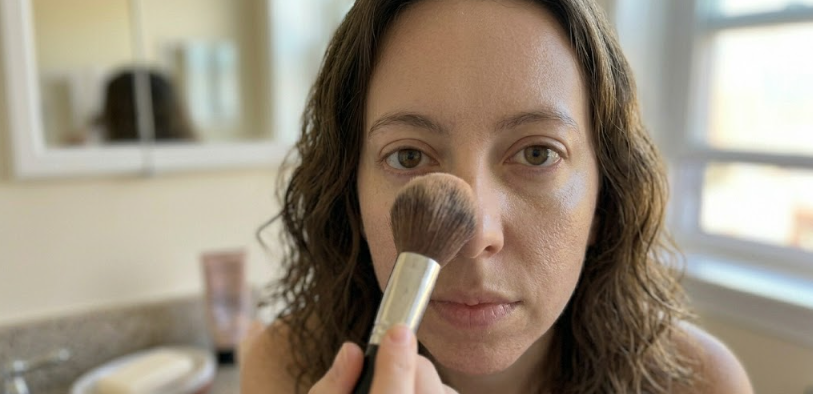
- Press a translucent setting powder lightly onto the forehead, nose, and chin only. Use a pressing motion rather than a sweep. Sweeping disrupts the foundation layer and can lift the finish on the cheeks.
- Stop at the edge of the cheekbone. Powder on the cheekbone flattens the surface that needs to carry the glow. The contrast between a mattified T-zone and luminous cheeks is what reads as a controlled dewy finish rather than all-over shine.
“Don’t overdo powder. Going overboard could backfire by making your pores push out more oil.” — makeup artist, WebMD
“You layer on tons of powder to lock your foundation into place, only to wind up with your skin looking super-cakey and dry.” — beauty community forum
No products found.
(As an Amazon Associate, we earn from qualifying purchases.)

Step 6: Place the Glow on the High Points
Dewy makeup for oily skin isn’t a full-face finish. It’s a placement decision. Glow goes where light naturally hits, not where oil tends to pool.
- Apply cream or liquid highlighter on the tops of your cheekbones, inner corners of your eyes, and brow bone. Press it in with a fingertip so it melts into the skin rather than sitting on top.
- Choose cream over powder when you can. Cream products sit on the skin surface rather than settling into pores, so the finish reads luminous rather than glittery. Powder highlighter works, but it’s harder to control on oily skin as the day progresses.
Skip the nose tip, the full forehead, and the apple of the cheeks. Those placements amplify T-zone shine rather than framing it.
“The other option is using a matte foundation then adding in a highlighter.” — makeup artist, Marie Claire, October 2025
No products found.
(As an Amazon Associate, we earn from qualifying purchases.)

Step 7: Finish With a Dewy Setting Spray
The setting spray is what ties the whole routine together. It unifies the zones and locks the placement you’ve built.
- Mist a dewy or hydrating setting spray over your full face. Hold the bottle 8 to 10 inches away and let it settle without rubbing it in.
- Switch to blotting papers for midday touch-ups, not more powder. Powder layered on top of powder builds up and disrupts the finish on your cheeks. Blotting papers lift sebum without adding anything on top.
“Use blotting papers instead of powder for mid-day touch-ups.” — Live Tinted, April 2026
No products found.
(As an Amazon Associate, we earn from qualifying purchases.)
The Best Dewy Foundation for Oily Skin: What to Look For
The best dewy foundation for oily skin isn’t the dewiest formula you can find. It’s the most luminous oil-free formula that works with an active sebaceous layer rather than against it.
Formula types that work: Serum foundations, skin tints, and luminous-finish oil-free foundations let natural skin texture and light pass through rather than sealing the face under heavier coverage.
Ingredients to look for: Glycerin, hyaluronic acid, and niacinamide listed early in the formula. These humectants keep the finish luminous through the day without adding oil.
Ingredients to approach carefully: Squalane, fatty alcohols, and facial oils in the first five ingredients. They’re excellent for dry skin but can accelerate breakdown on an oily base.
On coverage: If you need to cover blemishes, a soft-matte medium-coverage foundation applied thinly and finished with strategic highlighter placement can hold longer than a full-face dewy formula. Both approaches work for dewy makeup for oily skin; the right choice depends on the coverage you actually need.
On skin tone: These recommendations have been tested across a limited shade range. Dewy-finish foundations may oxidize differently on tan and deep skin tones. Check your formula’s behavior at 30 minutes before committing to a full day of wear.
If you’re still searching for the right base formula, our roundup of the best foundations for oily skin breaks down exactly which ones hold up through the day.

Conclusion
Dewy makeup for oily skin works when the prep, formula, and placement decisions are made in the right order.
Niacinamide in the moisturizer layer moderates what your skin produces before any makeup goes on. An oil-free, humectant-based foundation keeps the finish luminous without compounding active sebum. Setting powder on the T-zone only, highlighter on the high planes only, and a dewy setting spray to lock it all together. That sequence is what separates a controlled glow from a greasy finish by hour four.
None of this requires expensive products. It requires understanding why oily skin and standard dewy formulas don’t get along, and making the formula and placement choices that account for it.
If you’ve tried dewy makeup for oily skin before and watched it fall apart by noon, the problem almost certainly wasn’t your skin. It was the product selection or the application sequence. Both are fixable.
This article contains affiliate links. We only recommend products that have been wear-tested and evaluated for performance.
Frequently Asked Questions
Can I use a dewy foundation if I have oily skin?
Yes. Dewy makeup for oily skin works when you choose a humectant-based, oil-free luminous formula and apply it in thin layers. Technique and prep matter as much as the product itself.
What’s the difference between dewy and greasy?
Dewy is controlled, light-reflective luminosity on the high planes of the face. Greasy is uncontrolled sebum across the T-zone and cheeks. Dewy makeup that lasts on oily skin keeps the glow on the cheekbones and away from the nose and forehead.
Should I use setting powder or setting spray for dewy oily skin?
Both, in different zones. Setting powder on the T-zone only to control oil. A dewy setting spray over the full face to unify the finish. Powder on the cheekbones flattens the glow you’ve built there.
Does dewy makeup work on acne-prone skin?
It can. Avoid foundations with heavy emollient ingredients that can clog pores. Humectant-based formulas and skin tints are generally safer for acne-prone skin. Spot-test before a full-face application.
How do I make dewy makeup last all day on oily skin?
Prep with a niacinamide moisturizer, prime the T-zone only, apply foundation in thin layers, set the T-zone with translucent powder, and touch up with blotting papers at midday. Formula selection, placement, and prep working together is what makes dewy makeup that lasts on oily skin achievable.
What’s the best primer for dewy makeup on oily skin?
A mattifying or pore-blurring primer on the T-zone and either nothing or a lightweight hydrating primer on the cheeks. Applying a mattifying primer everywhere removes the luminous surface the cheeks need.
Is cloud skin better than glass skin for oily skin types?
Generally yes. Cloud skin offers soft, diffused radiance without a wet finish, which suits oily skin better than the near-wet appearance of glass skin. Dewy makeup for oily skin lands closer to a cloud skin finish on most people.
Poll: Is Dewy Makeup for Oily Skin Actually Achievable?
Why did you vote that way? Drop your take below.