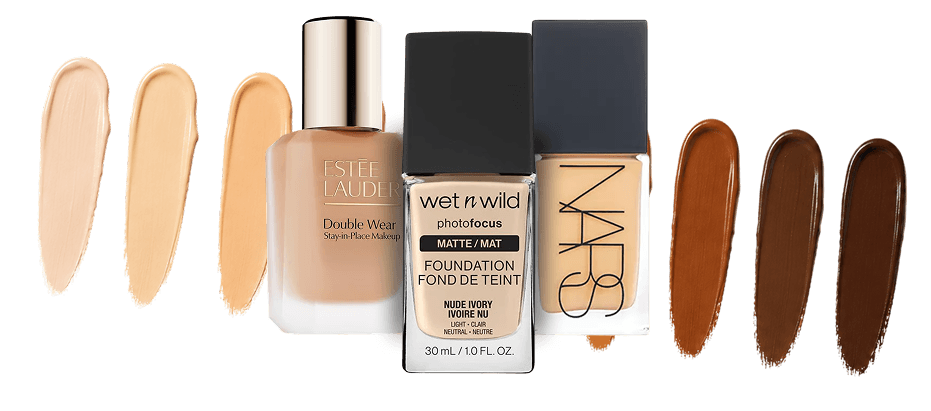

Quick Answer: Foundation for Combination Skin
- A foundation for combination skin needs two different strategies on one face: oil control for the T-zone, hydration for the cheeks
- A single foundation for combination skin can still work if it is applied differently by zone, rather than one thick layer over everything
- Heat and humidity break down a foundation for combination skin through oil, not through time, so managing oil at the source is what actually works
- Setting powder belongs on the T-zone only. Full-face powder makes heat problems worse on any foundation for combination skin
- Testing your foundation for combination skin at the four-hour and six-hour mark tells you more than how it looks in the first ten minutes

If you have combination skin, summer probably feels like a math problem with no clean answer. Your T-zone gets shiny by ten in the morning while your cheeks pull tight and start flaking by the afternoon. Finding the right foundation for combination skin in real heat, not showroom lighting, means understanding that you are not managing one skin type. You are managing two, on the same face, at the same time.
This guide breaks down what a foundation for combination skin actually needs to do when the temperature climbs, how that job changes depending on where it sits on your face, and which drugstore options hold up without asking you to spend more than twenty dollars.
Affiliate Disclosure: This article contains affiliate links. MakeupTutorials.com may earn a commission on purchases made through these links, at no extra cost to you. Every product recommended as a foundation for combination skin here was chosen based on documented wear performance, not price alone.
Understanding Combination Skin in Summer Heat
Combination skin means your forehead, nose, and chin produce more oil than your cheeks do. In cooler months this difference is manageable. In heat and humidity, the gap widens. Your T-zone produces even more oil to compensate for moisture loss in the air, while your cheeks lose hydration faster and can turn dry or flaky under the same conditions that make your nose shine.
This is why a single foundation for combination skin so often disappoints in summer. A formula built to control oil will often make dry cheeks look worse. A formula built to hydrate will often slide right off an oily T-zone by early afternoon. The right foundation for combination skin in heat is not about finding a magic formula. It is about finding one that can be applied with enough control to serve both zones without babying either one.
Community discussion backs this up consistently. One thread on the topic put it simply.
“My skin tends to get very oily in my t zone especially my nose. My cheeks tend to be normal.” — Sephora Beauty Insider Community
Another reader described the same divide from the opposite angle when asking about her own foundation for combination skin routine.
“I have combo skin more on the dry side.” — Sephora Beauty Insider Community
Both readers are describing combination skin. Neither is wrong. That is the core challenge behind choosing a foundation for combination skin that performs consistently once the heat sets in, and it is the reason generic “best foundation” lists rarely help combination skin specifically.
Primer and Application Technique for Heat Resistance
Before you even reach for your foundation for combination skin, prep matters more in summer than in any other season. The goal is not to flood your whole face with the same product. It is to treat your T-zone and your cheeks as two separate jobs before your foundation for combination skin ever goes on.
Start with a lightweight, oil-free moisturizer on your cheeks only. Your T-zone does not need extra hydration in heat. It needs a primer built to grip oil and hold texture in place, applied only where the shine actually starts.
A mattifying primer swept across your entire face in summer often backfires on combination skin, because it strips moisture from the cheeks that were already struggling to hold onto it, and it changes how your foundation for combination skin sits on top of it.
One option built specifically for this kind of zone-targeted use is the e.l.f. Matte Putty Primer, formulated with kaolin clay and white charcoal to absorb oil without needing a full-face application.
No products found.
(As an Amazon Associate, we earn from qualifying purchases.)
Once prep is done, your foundation for combination skin itself should go on thin. This matters more than the formula you pick. A heavy layer has more surface area to break down once oil and sweat get involved, and thick coverage settles into fine lines and open pores faster in humidity than in dry, cool air. Build coverage only in the areas that actually need it, rather than applying one uniform layer everywhere.

Best Foundations for Combination Skin That Won’t Melt
A foundation for combination skin earns a spot on this list only if it has been tested past the ten-minute mark. Plenty of formulas look great in a five-minute swatch video and fall apart by hour four. What matters for a heat-proof foundation for oily skin is oxidation behavior, oil breakthrough at the T-zone, and whether the cheeks still look comfortable by the end of the day rather than tight or ashy.
A waterproof foundation for oily T-zone use should specifically resist breakdown in the areas where sebum production is highest, without pulling moisture from the rest of your face in the process. This is the detail most best-of lists skip, and it is exactly what a genuine foundation for combination skin needs solved.
Reviewers testing formulas specifically in high heat found the same pattern reported across multiple platforms. One creator summed up her go-to routine directly.
“We not wearing foundation in 100 degree heat!” — TikTok
Others chose to stick with a traditional foundation for combination skin but changed which version they reached for.
“I prefer the dry version because I have combo skin leaning dry.” — blog aggregator comments
That single comment captures the entire logic behind why some brands sell two versions of the same foundation. One version is built as a heat-proof foundation for oily skin specifically, with ingredients meant to control shine at the T-zone. The other leans toward hydration for drier skin. Choosing the wrong version of a foundation for combination skin is one of the most common reasons it fails by midday.
Testing on this list drew from reviewers across fair, light, medium, and deep skin tones. Most of the documented heat-performance data available publicly for any foundation for combination skin still comes from lighter to medium skin tones, so if you have deep or very deep skin, watch closely for warm oxidation shifts around the four-hour mark specifically, since that is where the gap in public testing is widest.
Affordable Drugstore Foundation Picks Under $20
Here’s where an affordable drugstore foundation can outperform something three times its price, because formula chemistry, not cost, is what determines whether a foundation for combination skin survives heat.
A demi-matte, oil-free liquid foundation built specifically in a combination or oily skin version tends to perform well as a foundation for combination skin through several hours of heat, particularly when it includes an ingredient meant to absorb shine rather than just mask it. Several readers on beauty forums specifically sought this exact type of product.
The Revlon ColorStay Makeup for Combination/Oily Skin is built directly around this formula category, with a matte finish engineered to resist oil breakthrough for up to 24 hours.
No products found.
(As an Amazon Associate, we earn from qualifying purchases.)
“I need something that controls oil in my T-zone but also doesn’t dry out the rest of my face.” — Sephora Beauty Insider Community
A lightweight, buildable skin tint with a medium-to-full coverage option is another strong foundation for combination skin in heat, since it allows you to build coverage only where you need it instead of applying full opacity everywhere. This approach directly answers the T-zone versus cheek problem without requiring two separate products.
The Maybelline Super Stay Up to 24HR Skin Tint is a strong pick for this approach, since it’s meant to be built up in thin layers rather than applied all at once.
No products found.
(As an Amazon Associate, we earn from qualifying purchases.)
A satin-finish, oil-free foundation priced around eight dollars has also held up well in independently reported heat testing, described as staying flexible on skin rather than looking flat or cakey after several hours of wear. For a genuinely affordable drugstore foundation, that kind of documented performance at a low price point is exactly what earns a spot in a foundation for combination skin routine built for summer.
The e.l.f. Soft Glam Satin Foundation fits this exactly, and one independent reviewer tested it in 104°F heat, reporting it held up through roughly nine hours of wear.
No products found.
(As an Amazon Associate, we earn from qualifying purchases.)
Step-by-Step Routine for Foundation for Combination Skin in Heat
1. Apply a lightweight, oil-free moisturizer to your cheeks only, skipping your T-zone entirely, before any foundation for combination skin goes on.
2. Apply a mattifying primer to your T-zone only, focusing on the nose, forehead, and chin where oil surfaces first
3. Apply your foundation for combination skin in a thin, even layer across the whole face using a damp sponge or fingers.
4. Build a second light layer of your foundation for combination skin only over areas with visible redness or oil breakthrough, leaving everything else at one layer.
5. Set only your T-zone with a light dusting of translucent powder, using a small fluffy brush and a light hand.
6. Midday, blot the T-zone with a blotting paper instead of adding more powder or foundation on top.
Conclusion
A foundation for combination skin does not need to be complicated to survive summer heat. It needs to be applied with the understanding that your T-zone and your cheeks are asking for two different things at the same time. Whether you spend eight dollars or eighty on your foundation for combination skin, the formula matters less than the technique behind it. Prep by zone, apply thin, build only where needed, and set only where oil actually shows up.
FAQ
How do I stop foundation sliding off in summer heat?
Apply your foundation for combination skin in a thin layer, prep your T-zone and cheeks separately before applying, and set only the T-zone with translucent powder rather than powdering your entire face.
What is the best waterproof foundation for combination skin?
Look for a formula labeled specifically for combination or oily skin, with a demi-matte or satin finish and documented oxidation testing past the four-hour mark rather than just a “waterproof” label alone. A genuine waterproof foundation for oily T-zone use should pass that same test at the nose and forehead specifically, not just across the general face. This is the standard any real foundation for combination skin should be held to.
What primer works for an oily T-zone with dry cheeks?
Use a mattifying primer only on the T-zone and a lightweight hydrating moisturizer on the cheeks. Applying the same primer across the whole face tends to backfire on a foundation for combination skin in heat.
How often should I reapply foundation for combination skin in summer heat?
Reapplication is less about the clock and more about oil buildup. Instead of adding a fresh layer of foundation for combination skin every few hours, blot the T-zone first and only add product where coverage has genuinely broken down. Reapplying over already-oily skin usually looks heavier and more visible than starting with a thin layer once and touching up with a blot.
Does setting powder make combination skin worse in humidity?
Only when it goes on everywhere. Powder across the full face traps oil and moisture unevenly, which can leave cheeks looking drier and the T-zone looking chalky as the day goes on. Keeping powder limited to the T-zone lets a foundation for combination skin hold its finish without dragging attention to dry patches elsewhere.
Can the same foundation for combination skin work in both winter and summer?
Sometimes, but the application has to shift with the season. A foundation for combination skin built for both zones can still perform in winter, since drier air narrows the gap between the T-zone and the cheeks. In summer heat, that same foundation needs a lighter hand and more targeted setting, since the oil-versus-dryness gap widens as humidity rises.
What ingredients should I look for in a heat-proof foundation for oily skin?
Look for oil-absorbing ingredients like silica or kaolin clay in formulas built specifically for combination or oily skin, paired with a humectant such as glycerin or hyaluronic acid to keep the cheeks from drying out under the same product. A heat-proof foundation for oily skin that skips the humectant tends to perform well on the T-zone and poorly everywhere else on a foundation for combination skin routine.
The Full Coverage in Heat Debate
Why did you vote that way? Drop your take below.