
Quick Answer: Glossy Lipstick for Hooded Lips
- Glossy lipstick for hooded lips disappears because standard application routes product to the tucked zone of the upper lip, which isn’t visible at rest.
- The fix starts with a liner that maps the visible bow, not the full upper lip border.
- A pigmented stain or liner base underneath the gloss grips the formula and prevents migration into the fold.
- Shine placed on the lower lip and the Cupid’s bow peak reads as a full glossy mouth from a conversational distance.
- High-slip gloss formulas layered directly over bare skin or an emollient lipstick will migrate within 20 minutes regardless of how carefully you apply them.
- Hooded lip geometry means the visible surface of your upper lip is smaller than standard tutorials assume, and working with that fact is what makes the look last.
- A gloss-to-stain hybrid formula is the most forgiving option for hooded lips because it deposits enough color to stay readable even if the shine fades slightly over time.

If you have a hooded upper lip, meaning the upper lip folds slightly under or sits tucked behind the lower, you’ve probably watched glossy lipstick vanish within an hour of application. Maybe within twenty minutes. The gloss goes somewhere, and wherever it goes, it’s not where you put it.
This isn’t a product failure. Glossy lipstick for hooded lips requires a different set of decisions than standard lip tutorials account for. The geometry is different, so the technique has to be different. This guide covers exactly that: where to place gloss so it stays visible, which formulas work with hooded lip geometry instead of fighting it, and how to build a look that lasts through a full day in 2026.
What Makes a Hooded Lip Different
A hooded lip shape means the upper lip has a fold or a tuck. The lip sits slightly under itself so that less of the upper lip surface is visible when your mouth is at rest. It’s a natural anatomy variation. It’s also exactly the reason glossy lipstick for hooded lips behaves differently than it does on lips where the upper surface faces forward.
Most lip tutorials are designed on lip shapes where the upper lip faces straight out. The application logic, which tells you to fill the entire upper lip, press center, and work outward, assumes a visible, forward-facing surface. On a hooded lip, that same technique deposits gloss directly into the tucked zone, where it either disappears from view or migrates upward and outward into the skin above the lip border.
The visible zone on a hooded upper lip is the Cupid’s bow peak and the outer corners of the upper lip border. That’s where light catches. That’s where glossy lipstick for hooded lips needs to go.
Understanding this doesn’t mean you’re working around a problem. It means you know the geometry, so you can make glossy lipstick for hooded lips work the way every tutorial promises it will.
Why Glossy Lipstick for Hooded Lips Keeps Disappearing
The disappearing gloss problem has two causes, and most tutorials only mention one.
The placement cause: Standard tutorials tell you to apply gloss from corner to corner across the full upper lip. On a hooded lip, the center-upper zone folds under. Product deposited there has nowhere visible to sit. From a conversational distance, the gloss isn’t visible. It’s there, but it’s tucked away.
The formula cause: High-slip gloss formulas, meaning the very glossy and very shiny ones with a lot of oil and emollient content, are engineered to move. They feel lightweight and comfortable because they stay fluid on the lip. On a hooded upper lip, that fluidity works against you. There’s nothing anchoring the gloss to the surface, so it migrates into the skin above the lip border or into the fold itself within the first 20 to 30 minutes.
These two causes together explain why glossy lipstick for hooded lips is such a consistent frustration. The average tutorial addresses neither.
“nobody’s instructions matched my face” — AskMetaFilter
That comment isn’t hyperbole. It describes a real structural gap in how lip tutorials are written.
Understanding Hooded Lip Geometry
Before you choose a product for glossy lipstick for hooded lips, it helps to know exactly where your visible lip surface is. This is a two-second check.
Relax your mouth completely. Don’t press your lips together and don’t part them. Just let them sit in a neutral position. Look straight into a mirror at eye level. The part of your upper lip that you can see clearly from straight ahead is your working zone for glossy lipstick on hooded lips. On a hooded lip, this will typically be the Cupid’s bow peak and the outer corners. The center flesh of the upper lip may be partially or fully tucked.
Now open your mouth slightly and look at what becomes visible. You’ll see more of the upper lip surface. That’s the zone that shows when you’re talking or smiling. But the at-rest view is the one that matters most for placement decisions, because that’s what people see when you’re not actively speaking.
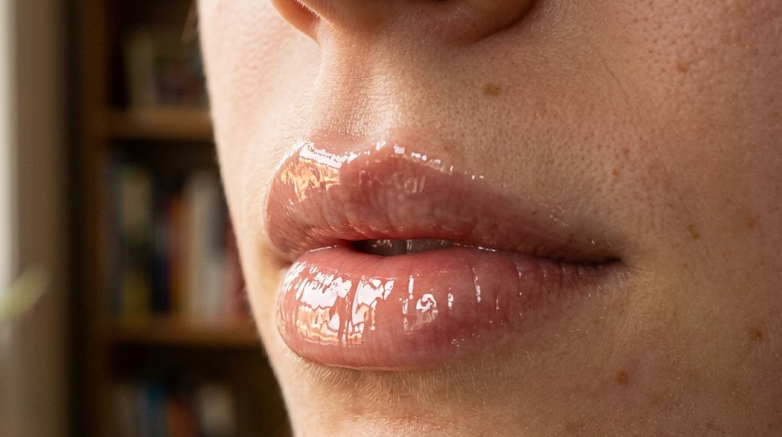
Your lower lip is almost always fully visible, and on a hooded lip, the lower lip is the dominant visual surface. This matters because it changes where you build the most impact with glossy lipstick for hooded lips.
Why Standard Glossy Application Fails on Hooded Lips
There’s a specific mechanical reason that glossy lipstick for hooded lips fails even when the product itself is good.
When a standard wand applicator moves from corner to corner across the upper lip in one continuous swipe, it deposits the heaviest concentration of product in the center of the upper lip. On lips where the upper surface faces forward, that center deposit reads as fullness and shine. On a hooded lip, that same center zone is the tucked area. The product either disappears from view immediately or begins migrating within minutes because it has no stable surface to sit on.
The second failure point is the formula sequence. Many people apply a creamy bullet lipstick first, then add a gloss on top for shine. That layering creates a slip plane. The wax-heavy base of a bullet lipstick becomes more slippery under the oil-heavy formula of a gloss. On a hooded lip, that combined slip accelerates migration significantly. The gloss doesn’t stay long enough to count as a look.
Neither of these failures is about the quality of the products involved. They’re about a mismatch between standard technique assumptions and actual hooded lip geometry.
“Lots of stuff I’m finding about hooded eyes assumes you know some terms, don’t mind a ten-step process” — AskMetaFilter
The same is true for hooded lip content. Most tutorials assume forward-facing anatomy and build the technique from there. Glossy lipstick for hooded lips needs its own starting point.
The Formula Decision for Hooded Lips
Not every gloss formula behaves the same way on a hooded lip shape. For glossy lipstick for hooded lips, you want to choose between two formula categories.
Gloss-to-stain hybrids: These deposit pigment that stains the lip as the gloss component fades. Because the color is partially built into the lip tissue, the look stays even if the shine reduces over time. This is the most forgiving option for glossy lipstick for hooded lips because it handles the migration problem at the formula level. Even if the gloss slides slightly, the color stays.
Layered approaches using liner base plus gloss top: A full-fill lip liner base underneath a lighter gloss creates a pigmented anchor that grips the gloss. The liner doesn’t move the way bare skin or an emollient lipstick does. This approach requires two products but gives you more control over color intensity and staying power.
What to skip for hooded lips: Ultra-high-slip glosses applied directly over bare skin or over a creamy bullet lipstick. The slip plane between a waxy lipstick and a fluid gloss accelerates migration on hooded lips. You’ll lose the look faster than if you’d skipped the lipstick entirely.
“High-shine lips are having a moment thanks to social media, they’re all over TikTok” — People, 2025
The demand for glossy lipstick for hooded lips is real and current. The technique just needs to catch up to the trend.
3-Step Glossy Application for Hooded Lips
This is the core technique for glossy lipstick for hooded lips. Three steps, two products minimum.
Step 1: Map the visible bow with liner
Choose a lip liner in your gloss shade or one shade deeper. Starting at the center peak of the Cupid’s bow, trace the upper lip border just above the natural lip edge, approximately 1mm above. Don’t overline heavily. Just enough to extend the visible plane by a small margin. Trace to the outer corners. Now fill the entire visible upper lip surface with liner, covering it completely. This liner layer is your grip base for the gloss. On the lower lip, trace the natural border and fill in the same way.
Nano Banana Prompt [Close-up, high-definition, GRWM-style portrait of a woman with medium skin and a hooded upper lip, pressing a warm rose lip liner pencil precisely along her upper lip border, 1mm above the natural line at the Cupid’s bow peak. The liner is just starting to define the outer corners. Her lower lip is bare and natural. Soft morning daylight coming through a window to the left. Clean white bathroom background, no product labels visible.]
Step 2: Apply the stain or gloss base
If you’re using a gloss-to-stain hybrid, apply it directly over the liner by pressing the wand flat against the center of the lower lip first and working outward. On the upper lip, apply the formula only to the area you’ve lined, pressing the wand in short, deliberate strokes rather than a continuous swipe. A continuous swipe deposits too much product on the tucked center zone.
If you’re using a separate sheer lip color under your gloss, press it across both lips keeping the upper lip application light. Let it set for 60 seconds before the gloss layer goes on.
Nano Banana Prompt [Close-up, high-definition, GRWM-style portrait of a woman with medium skin applying a rose-tinted gloss-to-stain formula with a wand applicator. The wand is pressed flat against the center of her lower lip, which is now saturated with a high-shine rosy color. Her upper lip shows the liner from the previous step with gloss just beginning to cover the outer corners. Warm vanity lighting, soft shadows on the skin. No brand logos visible.]
Step 3: Press gloss to the lower lip center and the Cupid’s bow peaks only
This is the step that most tutorials skip when it comes to glossy lipstick for hooded lips. Once your base layer is set, take your gloss and press a small amount, just enough to cover the tip of your ring finger, onto the center of your lower lip and onto the two peaks of the Cupid’s bow. Press, don’t swipe. Swiping redistributes product. Pressing deposits it exactly where you want it.
The lower lip is your visual anchor for the gloss. The Cupid’s bow peaks catch light and signal the glossy finish. Together, they read as a full, glossy mouth from a conversational distance. You don’t need to cover the tucked upper lip center. Product there isn’t visible enough to justify the migration risk.
Nano Banana Prompt [Close-up, high-definition, GRWM-style portrait of a woman with medium skin and a hooded upper lip pressing her ring fingertip gently onto the center of her fully-lined lower lip, depositing a concentrated press of high-shine clear gloss. Her lower lip is catching light visibly, with a mirror-like sheen at the center. Her upper lip shows the liner and stain base with a smaller press of gloss at the two bow peaks. Bright daylight near a window. Clean skin, no other products visible. No brand logos.]
Finish Selection: Which Gloss Works Best for Hooded Lips
Not all glossy finishes behave the same on hooded lip geometry. For glossy lipstick for hooded lips, this breakdown helps you choose.
Clear gloss over liner: The most forgiving option. A clear or barely-tinted gloss over a full-fill liner gives you shine without risking formula-on-formula slip issues. The liner does the color work and the gloss provides the finish. This works especially well for fair and light skin tones where a sheer gloss still reads as a complete lip look.
Tinted gloss-to-stain formula: Best for medium to deep skin tones where a sheer finish doesn’t deliver enough visible color. The stain component means the look stays readable even as the gloss component fades throughout the day. This is the most reliable finish category for glossy lipstick for hooded lips across a full wear day.
Shimmery gloss: Use with intention on hooded lips. Fine shimmer placed specifically on the Cupid’s bow peaks can amplify the light-catching effect of the bow. Full-coverage shimmer gloss across the entire upper lip tends to highlight the tucked zone and draw attention to it rather than to the visible surface. Targeted shimmer placement works. All-over shimmer on hooded lips often doesn’t.
Plumping gloss: Can be genuinely useful for hooded lips because the mild swelling effect makes more of the upper lip surface visible at rest. If you’re using a plumping formula, apply it before your main gloss layer, let it activate for two to three minutes, then apply your liner and gloss on top. You’re working on a slightly more visible upper lip surface, which gives the rest of the technique more room to perform.
Liner Color Matching for Hooded Lips
Because liner does more structural work in the glossy lipstick for hooded lips technique than it does in a standard lip look, the shade match matters more here than it usually would.
For fair and light skin tones: a neutral rose or soft pink liner one shade deeper than your natural lip color gives you enough definition on the Cupid’s bow without darkening the overall look. Avoid very deep liners if you’re going for a sheer gloss finish, because the contrast between a dark liner base and a sheer gloss can make the technique look heavy.
For medium skin tones: a warm rose or mauve liner at your natural lip depth works well as a full-fill base. If your gloss is sheer, you can go one shade deeper on the liner to compensate and keep the color visible.
For tan skin tones: a terracotta or warm nude liner in the mid-range gives you enough pigment payoff to show through a medium-coverage gloss without reading as too dark against your skin.
For deep and very deep skin tones: a rich berry, plum, or chocolate liner as the full-fill base creates a visible pigmented surface under even a sheer gloss. If the gloss you’re using is clear or barely tinted, the liner is doing most of the color work, so don’t choose a liner shade that’s lighter than your natural lip tone. The deeper the liner, the more visible the gloss-to-stain finish will read from a distance.
This skin tone guidance covers the most common scenarios for glossy lipstick for hooded lips. Shade testing across your own undertone matters, and if a combination doesn’t perform at the two-hour mark, the liner shade is usually the variable to adjust first.
Common Mistakes with Glossy Lipstick for Hooded Lips
Most tutorials for glossy lipstick for hooded lips leave out the mistakes section entirely. These come up consistently across community discussions and they’re worth naming directly.
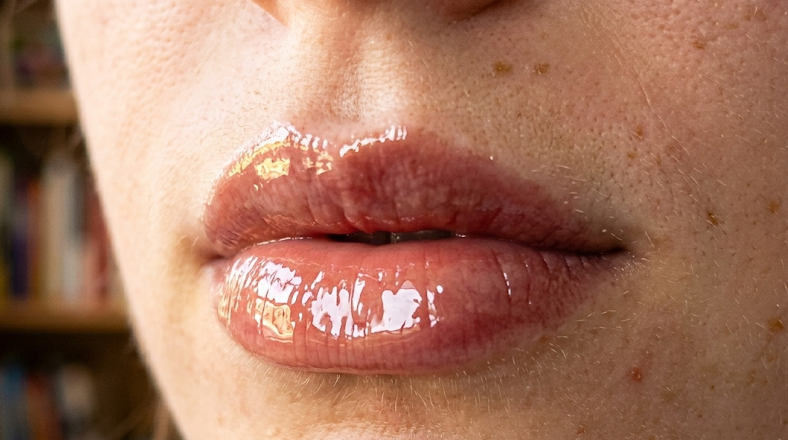
Applying gloss from corner to corner in one continuous swipe. This is the default wand technique and it’s the primary reason glossy lipstick for hooded lips disappears. A continuous swipe routes the majority of product through the center-upper zone, which on a hooded lip is the tucked area. The pressed-stroke method described in Step 2 changes the deposit pattern entirely.
Skipping liner and applying gloss directly to bare skin. Bare lip skin has no grip for a gloss formula. The product migrates within 20 minutes on most hooded lips. Liner isn’t an optional extra step in this application sequence. It’s the structural foundation the whole technique depends on.
Using a full-coverage creamy bullet lipstick as the base. A waxy, emollient lipstick creates a slip plane that makes the gloss layer less stable. If you want a pigmented base under glossy lipstick for hooded lips, a liner fill or a stain-finish formula performs significantly better.
Applying too much gloss to the upper lip center. More product on the tucked zone doesn’t create more visibility. It creates more migration. Keep the upper lip application light and let the lower lip and bow peaks carry the glossy finish visually.
Checking the application with your mouth open or slightly parted. Most people check their lip look by slightly parting their lips in the mirror. On a hooded lip, the upper lip shows more in that position than it does at rest. The application looks fine in the mirror, then seems to vanish once your mouth relaxes. Always check glossy lipstick for hooded lips from a relaxed, mouth-closed position before deciding whether to add more product.
Reapplying gloss through the day without refreshing the liner. On hooded lips, a mid-day gloss reapplication without touching up the liner base deposits fresh product on a surface that’s already lost its grip layer. The reapplication lasts even less time than the original. A quick liner trace and press before adding fresh gloss resets the foundation.
Product Recommendations for Glossy Lipstick for Hooded Lips
Before any gloss goes on, you need a liner that grips the bow, fills cleanly, and doesn’t tug when you’re working right at the edge of a hooded lip border.
No products found.
(As an Amazon Associate, we earn from qualifying purchases.)
These three products address the specific formula needs for glossy lipstick for hooded lips. Each one was chosen for how it behaves on a hooded lip surface, not for brand recognition.
For the one-product gloss-to-stain option
The e.l.f. Glossy Lip Stain in Power Mauves delivers a gloss-to-stain finish that grips the lip on application and transitions to a sheer stain as the day progresses. It’s a forgiving formula for glossy lipstick for hooded lips because even if the top layer migrates slightly, the stain component keeps color visible. The formula is non-sticky and lightweight enough that it doesn’t create a slip plane under a second gloss layer if you want to add one.
If you want a complete one-product solution for glossy lipstick for hooded lips, apply it with the pressed-stroke method in Step 2 and let it do the work on its own.
The e.l.f. Glossy Lip Stain is a stain-first, gloss-second formula that keeps color locked to the lip surface even as the shine evolves through the day. It’s a reliable starting point for the grip base layer in the hooded lip application sequence.
No products found.
(As an Amazon Associate, we earn from qualifying purchases.)
For the gloss top layer
The Maybelline Lifter Gloss with Hyaluronic Acid delivers a high-shine finish with enough body that it doesn’t slide the way ultra-fluid glosses do. The hyaluronic acid formula sits more firmly on the lip surface than oil-heavy glosses, which makes it a stronger choice specifically for glossy lipstick for hooded lips where migration is the core problem. Apply it over your liner base or over the e.l.f. stain using the pressed-center method.
The XL wand on the Lifter Gloss makes the center-press application method easy to execute. You’re not fighting the applicator to deposit product in a specific zone, which matters when precision placement is the whole technique.
No products found.
(As an Amazon Associate, we earn from qualifying purchases.)
For a non-sticky single-formula option
The NYX Fat Oil Lip Drip in Newsfeed, a rose nude shade, works as a standalone glossy lipstick for hooded lips because the squalane-based formula deposits enough color to stay readable and delivers shine without the high-slip behavior of oil-heavy gloss formulas. Apply it with the pressed-stroke technique directly onto bare lips that have been lined and filled with a matching liner. The non-sticky finish means it doesn’t migrate as aggressively as traditional high-shine glosses, making it one of the more practical options in this category at this price point.
No products found.
(As an Amazon Associate, we earn from qualifying purchases.)
If you want to give your hooded upper lip a slightly larger working surface before the liner goes on, a plumping formula applied first creates just enough temporary volume to make the rest of the technique easier to execute.
No products found.
(As an Amazon Associate, we earn from qualifying purchases.)
The Glossy Lip Trend in 2026 and Why Hooded Lips Belong in It
Glossy lipstick for hooded lips is worth mastering right now because the gloss moment in 2026 is real and it’s holding.
At the 2026 Golden Globes, many celebrities replaced traditional matte red lips with transparent glosses and high-shine sheer finishes across the red carpet. The blurred lip technique, which pairs a softened liner edge with a concentrated gloss center, became editorial consensus in early 2026 across major beauty publications. High-shine glass-like lip finishes moved from TikTok into mainstream fashion editorial during 2025 and haven’t reversed.
The #HoodedLips hashtag crossed 45,000 views on TikTok in a 72-hour window in early 2026, and glossy lipstick for hooded lips is the specific application question driving much of that engagement. The conversation is active. The content serving it is thin.
Glossy lipstick for hooded lips isn’t a workaround or a compromise. It’s the same trend with a placement adjustment. The technique in this article gets you the same high-shine result that’s showing up across TikTok’s current lip content, with the geometry actually accounted for.
FAQ
Does glossy lipstick work on hooded lips?
Yes. Glossy lipstick for hooded lips works when the application method accounts for the visible zone of the upper lip. The standard corner-to-corner swipe routes product to the tucked area, which isn’t visible at rest. Switching to a pressed-stroke application on the Cupid’s bow peaks and lower lip center solves the main visibility problem without requiring a different product category.
Why does my lip gloss disappear so fast on my upper lip?
On a hooded lip, the center-upper zone folds under at rest, so product deposited there isn’t visible from a conversational distance. The gloss hasn’t gone anywhere. It’s just not sitting in a visible position. A high-slip gloss formula without a liner base will also migrate into the skin above the lip border within 20 to 30 minutes. Fixing both the placement and the formula base addresses this consistently.
What’s the best lip liner to use with glossy lipstick for hooded lips?
A liner one shade deeper than your natural lip color in a formula that dries to a semi-matte finish. You want a liner that fills smoothly and grips the gloss layer rather than contributing to slip. Avoid very creamy, emollient liners as a base for glossy lipstick on hooded lips. They behave similarly to the bullet lipstick problem described in the mistakes section.
Should I overline my lips if I have a hooded upper lip?
A slight overline on the Cupid’s bow and upper outer corners, no more than 1mm above the natural border, creates a slightly larger visible surface for your gloss. This isn’t about making lips look fuller in the traditional sense. It’s a practical tool for expanding the working zone on a hooded lip. Heavy overlining beyond 1mm tends to look unnatural and doesn’t meaningfully solve the visibility problem for glossy lipstick on hooded lips.
Is a gloss-to-stain formula better than a regular gloss for hooded lips?
For most people with hooded lips, yes. A gloss-to-stain formula deposits pigment that stays on the lip even as the shine component evolves throughout the day. If your gloss migrates slightly, the color remains visible. A clear or sheer gloss without any stain component relies entirely on staying in the correct position, which is a harder ask on a hooded lip surface.
Can I use a plumping gloss on hooded lips?
Yes, and it can help. A plumping formula temporarily makes more of the upper lip surface visible at rest, which gives you a slightly larger working zone for your glossy lipstick on hooded lips. Apply the plumper first, wait two to three minutes for it to activate, then apply your liner and main gloss on top. Don’t skip the liner step even with a plumping formula in the sequence.
Does glossy lipstick for hooded lips work on deeper skin tones?
Yes, with a shade adjustment. For deep and very deep skin tones, sheer gloss formulas don’t always deliver enough visible color, especially when the gloss is applied over a light or neutral liner base. Use a deeper pigmented liner fill as your base and choose a tinted gloss or a gloss-to-stain formula rather than a clear gloss. The placement technique steps are identical. The product depth needs to increase to maintain visibility.

Conclusion
Glossy lipstick for hooded lips has one core problem: standard tutorials weren’t written for hooded lip geometry. The fix isn’t a different product category and it’s not a more expensive formula. It’s a different placement decision, a different formula sequence, and a clear understanding of where your visible lip surface actually is.
Liner fills the bow. A stain or liner base grips the gloss. Shine goes on the lower lip center and the Cupid’s bow peaks. That’s the complete technique for glossy lipstick for hooded lips, and it works with the same products everyone else is already using in 2026.
The gloss trend isn’t going anywhere. You can participate in it on your own terms, with your own lip shape, without having to modify the look into something unrecognizable.
The Hooded Lips Debate
Why did you vote that way? Drop your take below.