Quick Answers: Textured Acne Scars Concealer
- The right textured acne scars concealer choice depends on whether your scarring is raised, pitted, or a mix of both.
- Thin, blurring formulas work best on raised or rolling texture, and thicker, buildable formulas work best on pitted or deep texture.
- Skin prep changes what any textured acne scars concealer formula can do, but it doesn’t replace the need for the correct formula type.
- Applying concealer in thin layers prevents the cakey look that makes texture more visible, not less.
- A textured acne scars concealer routine should never require full-face coverage. Spot placement works better than blanket application.
- Setting powder should only go where oil actually shows up. Powdering the whole face can settle into texture and make it look rougher.
- Testing your textured acne scars concealer choice under real light for 30 minutes tells you more than testing it under a bathroom mirror.
This article contains affiliate links. We may earn a commission if you purchase through them, at no extra cost to you.
Why Concealer Behaves Differently on Textured Skin
Textured acne scars concealer shopping gets confusing fast because most concealer marketing talks about coverage level, not texture behavior. Coverage and texture are not the same problem. A concealer can have full coverage and still look wrong on textured skin if the formula is wrong for the texture type underneath it.
Here’s the actual mechanic. Thick, high-pigment formulas sit on top of skin. On raised texture, that’s a problem, because the product pools around the raised areas and makes shadows more visible instead of less. On pitted or indented texture, a thin formula does the opposite. It sinks into the low points and leaves them looking hollow while the surrounding skin stays smooth, which draws the eye straight to the exact spot you were trying to soften. Getting your textured acne scars concealer formula matched to your actual texture type solves both problems at once.
This is why a textured acne scars concealer routine that works for one person can look wrong on someone else, even with the same product. It isn’t about skill. It’s about matching formula type to scar type, and most tutorials skip that step entirely.
Mild Texture vs. Deep Texture: How to Tell the Difference
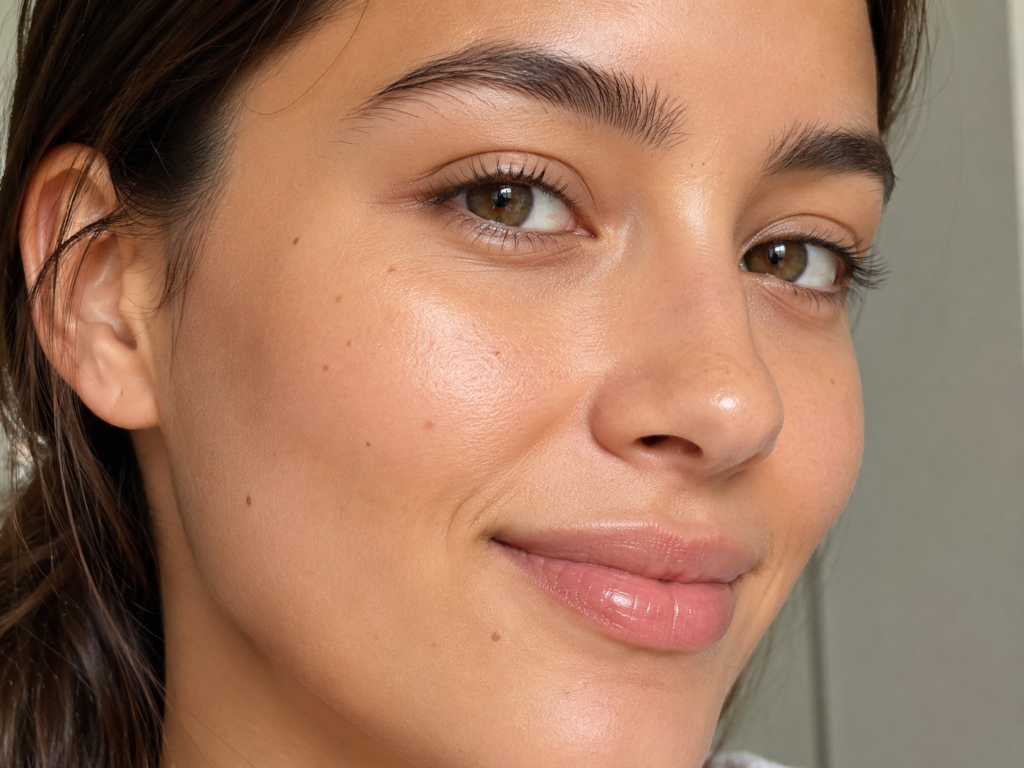
Before picking a textured acne scars concealer, look at your skin in daylight, without makeup, at a slight angle. This tells you more than looking straight into a mirror.
- Mild or moderate texture looks like light roughness or shallow rolling waves in the skin. Light doesn’t cast strong shadows on it. This type responds well to a thin, minimal-coverage textured acne scars concealer approach.
- Deep or established texture shows visible pitting, sharp-edged depressions, or ice-pick style marks. Light casts real shadows here, especially from the side. This type needs a textured acne scars concealer formula built for buildable coverage, applied with a specific technique, not just a thin swipe.
Most people have a mix of both. That’s normal, and it means your textured acne scars concealer routine might use two different techniques on different parts of the same face.
Technique for Mild to Moderate Texture
This mild-texture textured acne scars concealer approach keeps skin looking like skin. It’s the right call when texture is light and shallow.
Step 1: Prep with a lightweight, non-drying moisturizer.
Apply a hydrating moisturizer and let it fully absorb for two to three minutes before touching a primer or concealer. Dry patches grab onto any textured acne scars concealer formula and make texture worse, so this step isn’t optional.
Step 2: Apply a thin layer of a satin or hydrating concealer directly on the textured areas only.
Use your finger or a small brush to dot concealer onto the roughest patches, not the whole face. Pat, don’t drag, so you don’t pull at the texture. This is the core move in any textured acne scars concealer routine built for mild texture.
Step 3: Blend the edges outward with a damp sponge.
Bounce a barely damp makeup sponge around the edge of where you applied concealer so there’s no visible line between covered and bare skin.
Step 4: Skip powder on textured areas.
Set only your T-zone if it gets oily. Leave the textured cheek areas powder-free so a mild-texture textured acne scars concealer routine keeps a soft, skin-like finish.
Technique for Deep or Established Texture
This deep-texture textured acne scars concealer method matches a formulation-first standard: prep alone doesn’t fix a formula mismatch, so the right product category comes before the technique.
Step 1: Neutralize redness with a color corrector before concealer.
If your scars carry a red or dark tone, pat a small amount of green or peach color corrector onto them and let it set for sixty seconds before your textured acne scars concealer formula goes on top.
Step 2: Apply a full-coverage, buildable concealer in thin layers, not one thick pass.
Add one light layer, let it sit for thirty seconds, then decide if a second layer is needed. This keeps the formula from pooling in pitted areas, which is where most deep-texture textured acne scars concealer routines go wrong.
Step 3: Stipple, don’t drag, to avoid pulling product into the low points.
Use a small stippling brush in a light tapping motion rather than swiping the concealer across the skin. Dragging pushes product into pitted areas and leaves high points bare.
Step 4: Set with a light dusting of translucent powder, pressed not swept.
Press a small powder puff gently onto the concealed area instead of sweeping a brush across it. Sweeping motion can shift a buildable textured acne scars concealer formula out of pitted spots right after you’ve placed it.
Building the Rest of Your Routine Around It
Whichever technique you land on, the products underneath matter as much as the concealer itself. A textured acne scars concealer routine falls apart fast if the primer or corrector underneath fights the concealer’s formula instead of supporting it.
If your scarring runs on the red or inflamed side, color correction before concealer solves a problem no amount of textured acne scars concealer coverage alone can fix. This next pick works underneath either the mild or deep texture technique above, since it’s a thin, hydrating layer rather than a heavy one.
The e.l.f. Camo Color Corrector for Dark Circles is worth a look here. It’s hydrating and lightweight, built with hyaluronic acid, and layers under a concealer without adding bulk that could sit in pitted texture.

- PEACH COLOR CORRECTOR: Camouflages spots and darkness found under the eyes in fair to medium skin tones.
- HYDRATING SKINCARE-INFUSED FORMULA: Infused with hyaluronic acid, this long-lasting and crease-resistant formula helps smooth under-eyes to...
Last update on 2026-10-20 / Affiliate links / Images from Amazon Product Advertising API
(As an Amazon Associate, we earn from qualifying purchases.)
For mild to moderate texture, a satin, hydrating concealer keeps skin looking like skin instead of a mask. This is where the mild-texture technique from earlier actually holds up over several hours of wear, and it’s the formula type most mild-texture textured acne scars concealer routines are missing.
The e.l.f. Hydrating Camo Concealer fits that need. It’s a satin-finish, hyaluronic acid formula built to resist creasing without drying out textured skin.
Shade-specific listing. Confirm your undertone and depth before ordering, since e.l.f. offers this formula across 25 shades.

- CREASE-PROOF COVERAGE: The e.l.f. Hydrating Camo Concealer is a long-wear liquid concealer that provides crease-proof full coverage while...
- NO MORE UNDER-EYE CIRCLES: This nourishing product covers up imperfections and under-eye circles while delivering a boost of hydration to your...
Last update on 2026-10-20 / Affiliate links / Images from Amazon Product Advertising API
(As an Amazon Associate, we earn from qualifying purchases.)
For deep or established texture, the buildable, matte technique needs a formula that won’t slide off by midday. This is the pick that matches the deep-texture textured acne scars concealer steps above.
The L’Oreal Paris Infallible Full Wear Concealer offers a matte, waterproof, full-coverage formula built for exactly this kind of buildable, long-wear application.
Shade-specific listing. This formula runs in 25 shades. Confirm your undertone and depth before ordering.

- Full Coverage Concealer: Experience full coverage and full face wear with a flawless matte finish for up to 24 hours; This multi use formula...
- Maximum Coverage: Our extra large applicator provides maximum coverage in one stroke to cover under-eye circles, acne scars, and discoloration...
Last update on 2026-10-20 / Affiliate links / Images from Amazon Product Advertising API
(As an Amazon Associate, we earn from qualifying purchases.)
The Bottom Line
A textured acne scars concealer routine works when the formula matches the texture type, not just the coverage level. Mild texture wants restraint, thin layers, and a satin finish that keeps skin visible underneath. Deep texture wants a buildable, matte formula applied with a stippling technique that avoids pooling in pitted areas.
Prep supports both approaches, but it can’t replace picking the right formula category in the first place. Test whichever textured acne scars concealer routine you land on for a full day before deciding it’s a keeper. The four-hour mark tells you more than the first application ever will.
Frequently Asked Questions
1. What is the best textured acne scars concealer for pitted scarring?
Look for a full-coverage, buildable, matte formula. Thin, dewy formulas tend to sink into pitted texture and make it more visible, so a matte textured acne scars concealer choice usually performs better here.
2. Can I use the same textured acne scars concealer for oily and dry skin?
Not usually. Oily skin does better with a matte, longer-wear formula, while dry skin needs a hydrating textured acne scars concealer formula that won’t cling to flaky patches and highlight them.
3. Should I set my textured acne scars concealer with powder?
Only where you actually get oily, usually the T-zone. Setting powder over textured cheeks can settle into the texture and make it look rougher.
4. Why does my concealer look cakey on textured skin even in a thin layer?
This usually means the formula is too thick or too matte for your specific texture type. Switching to a lighter, more hydrating textured acne scars concealer formula often solves it without changing the amount you apply.
5. How do I stop concealer from sinking into pitted acne scars?
Stipple instead of dragging, apply in thin layers, and let each layer set for thirty seconds before adding more. This is the single biggest fix for a deep-texture textured acne scars concealer routine.
6. Is color correcting necessary before applying textured acne scars concealer?
It helps most when scarring carries visible redness. A thin layer of color corrector before your textured acne scars concealer step means you need less concealer overall, which keeps the final texture look lighter.
7. How often should I switch up my textured acne scars concealer routine?
Skin texture can shift with hydration, weather, and breakouts, so it’s worth reassessing your textured acne scars concealer formula choice every few months rather than assuming one routine works year-round.
Quick Poll!
Why did you vote that way? Drop your take below.