Quick Answer: Tinted Lip Balm
- Tinted lip balm is 2026’s standout budget beauty buy. Drugstore options now match prestige formulas on color payoff and finish at roughly a third of the price.
- The glazed, sheer-tinted finish driving this trend is achievable with the best drugstore tinted lip balm picks. e.l.f. Glow Reviver and Milani Color Fetish compete directly with Rhode ($16) and Summer Fridays ($24). Nars Afterglow ($28) sits at the same finish tier with a different conditioning formula behind it.
- Tinted lip balm and tinted lip oil are different formats that produce a similar-looking result. Wax-emollient balms cling longer and build buildable color per coat. Tinted lip oils like Neutrogena Hydro Boost feel weightless and self-spread, with shorter wear.
- For deeper skin tones, warm nudes, mauves, berries, and brick reds build visible color. Cool-toned sheers can read ashy or near-invisible.
- The technique matters as much as the product. Two thin layers with a 30-second pause between them creates the glazed look. One thick swipe gives a flat conditioning sheen.

Tinted lip balm has been quietly taking over beauty routines in 2026, and the timing isn’t accidental. Tariff pressure and inflation pushed shoppers to rethink where their money goes, so a $9 product that delivers the same glazed finish as a $26 prestige balm stopped being a compromise and started being the smarter call. Searches for the best drugstore tinted lip balm are climbing across every major platform right now, and the community verdict is increasingly clear: the drugstore tier has closed the gap on color payoff and gloss finish.
What the drugstore tier hasn’t closed is the gap on conditioning actives, and that distinction is worth understanding before you buy. This article breaks down what each price point delivers, which drugstore picks are worth your money, where balm and oil formats actually differ, what works on deeper skin tones, and the layering technique that separates the glazed trend look from a plain conditioning swipe.
Why Tinted Lip Balm Is 2026’s Recession Beauty Trend
Beauty spending data points in the same direction right now. When shoppers are cautious, they tend to do one of two things. They trade down to lower-priced options, or they trade up to a value buy. Tinted lip balm at $7-$9 satisfies both impulses at once, which is why search and purchase behavior around the best drugstore tinted lip balm picks has been climbing steadily (Glossy).
The cultural framework here is the lipstick index, a theoretical indicator that posits consumers will keep spending on affordable luxuries during economic downturns even as bigger discretionary purchases slow down (Chase). Leonard Lauder, chairman of Estée Lauder, first proposed this after observing that lipstick sales rose following the 2001 recession (Wikipedia). In 2026, the affordable luxury isn’t a bold lipstick. It’s a $9 tinted lip balm that delivers a trending finish. e.l.f. Beauty’s CFO noted in early 2026 that the lipstick index is alive and well, citing 28 consecutive quarters of market share gains for the brand (CFO Brew).
There’s another driver running underneath the economic one. A real shift has happened in what readers want a lip product to feel like. Glosses dominated the 2022-2024 cycle, and a meaningful share of users got tired of sticky finishes, hair sticking to lips, and constant reapplication. Hygiene awareness coming out of recent flu cycles compounded the same instinct. Tinted lip balm offers a lower-touch alternative. It doesn’t demand a mirror, and it sits flat on the lips instead of piling up the way a gloss does. Vogue, ELLE, Byrdie, and Allure all ran tinted lip balm roundups in Q1 2026, and that publisher pile-on isn’t coincidence. It tracks the search and discovery data.
What makes the best drugstore tinted lip balm picks shareable beyond price is the social framing. “I found the $7 version” functions as a small cultural win in a way a standard product purchase doesn’t. That shareability is a real part of what’s driving sustained attention to the category.
What the Prestige Tier Actually Delivers and What It Doesn’t
A fair comparison starts by being specific about what’s actually being duped.
Rhode Peptide Lip Treatment ($16) is formulated with peptides, cupuaçu butter, and a vitamin C derivative. The formula is skincare-inspired, layering in actives designed to support long-term lip health (Forever Mursal). That formulation earns its price if barrier repair and conditioning over time are part of why someone wants the product.
Summer Fridays Lip Butter Balm ($24) leans richer and more emollient. Testers describe it as extremely hydrating with a sheer wash of color across seven shade options (The Daily Beast). The finish is thicker than Rhode, and the wear sits closer to a treatment balm than a lip color.
Nars Afterglow Tinted Lip Balm ($28-$30) was reformulated and now centers on a Moisture-Locking Blend with Monoï complex, shea butter, vitamin E, and hyaluronic acid. The brand claims 24-hour hydration, and the finish is a buttery, non-sticky shine. Independent customer aggregations on Sephora group Afterglow with Ilia Balmy Tint and Lawless Forget the Filler in the same prestige category.
What the best drugstore tinted lip balm options match across this prestige tier is the visible result: glazed sheer color and the comfortable cushion of a balm on the lip surface. What they don’t match are the conditioning actives. Rhode’s peptide chemistry does work that an $8 product isn’t engineered to do. Same goes for the rich emollient load in Summer Fridays and the hyaluronic acid blend in Nars Afterglow. The honest framing is that drugstore tinted lip balm dupes can reach the look and feel, but the skincare-grade lip treatment claim still belongs to the prestige tier.
If your lips are genuinely dry and you want the skincare benefit alongside color, this is where I’d point you first.

Last update on 2026-10-20 / Affiliate links / Images from Amazon Product Advertising API
(As an Amazon Associate, we earn from qualifying purchases.)
When someone tells me their lips are chronically dehydrated and they want a richer feel than Rhode delivers, this is the formula I’d recommend.

- Tinted Lip Butter Balm Gift Set – Includes Summer Fridays Lip Butter Balm in Vanilla and Vanilla Beige. Together, they deliver nourishing...
- Lip Butter Balm – Vanilla – A conditioning lip mask and balm that hydrates and soothes parched lips using shea and murumuru butters, with a...
Last update on 2026-10-20 / Affiliate links / Images from Amazon Product Advertising API
(As an Amazon Associate, we earn from qualifying purchases.)
For the buttery balm feel and the 24-hour hydration claim that anchors the prestige tier, this is the one worth a closer look.

Last update on 2026-10-20 / Affiliate links / Images from Amazon Product Advertising API
(As an Amazon Associate, we earn from qualifying purchases.)
Disclosure: This article contains affiliate links. We may earn a commission on qualifying purchases at no additional cost to you.
Tinted Lip Balm vs. Tinted Lip Oil: Know What You’re Buying
Here’s a distinction that the 2026 trend cycle has been blurring. Tinted lip balm and tinted lip oil are different formats that produce a similar-looking result. Knowing which one is in your hand changes how it behaves on your lips and how long it stays there.
A balm is a wax-emollient base. Beeswax, candelilla wax, or synthetic equivalents create a cushion that sits on top of the lip surface. The wax structure holds pigment in place, which is why a balm builds color predictably with a second coat. The trade-off is feel. Balms can sit thicker, especially in summer, and the wax base is what creates the cling that lets them survive an espresso or two.
A tinted lip oil is wax-free. The base is typically a blend of plant oils with silicone or ester carriers. Pigment sits suspended in liquid rather than locked in wax. Oils self-spread on contact, feel weightless on the lips, and impart a glassier shine than a balm. The trade-off is wear time. Oils fade faster than balms, often within an hour or two, and the pigment payoff in a single coat is usually lighter than a comparable balm.
Neutrogena Hydro Boost Tinted Lip Oil is a tinted lip oil. It’s been marketed alongside the best drugstore tinted lip balm category because the finish reads similarly, but the formula is engineered differently. Kosas Wet Stick sits at a hybrid in the middle, with a heavier oil base that behaves closer to a balm than a true lip oil.
How do you pick between them? If your lips are dry, prone to cracking, or you want a single product to last a few hours without reapplication, a tinted lip balm is the right format. If your lips are healthy, you want a glossier wash of color, and you don’t mind a quick top-up after lunch, a tinted lip oil delivers the lighter, glassier finish. A reader on Sephora’s community forum summed up the skepticism about oils plainly: “lip oils, to me, they’re still an unnecessary hybrid of balm and gloss.” Whether that critique lands depends on what you wanted the product to do in the first place.
For the dupe conversation specifically: Hydro Boost Tinted Lip Oil isn’t a one-to-one Nars Afterglow dupe. The two products deliver overlapping aesthetic results but different wear curves and different formulas behind them. The closer drugstore dupe for Nars Afterglow’s balm format is e.l.f. Glow Reviver. Hydro Boost is the drugstore reach for the lip oil category specifically, where the prestige comparison sits with Kosas Wet Lip Oil Gloss or Tower 28 LipSoftie.
If a tinted lip oil is the format you actually want, this is the drugstore pick worth starting with.
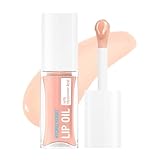
- Lip care: A hydrating lip treatment oil that banishes dry lips; formulated with purified hyaluronic acid that binds to water and holds it within...
- Glossy lips: 91% agree it provides a mirror-like high shine*; no stickiness, with all the payoff of plenty of shine; adds a boost of hydration to...
Last update on 2026-10-20 / Affiliate links / Images from Amazon Product Advertising API
(As an Amazon Associate, we earn from qualifying purchases.)
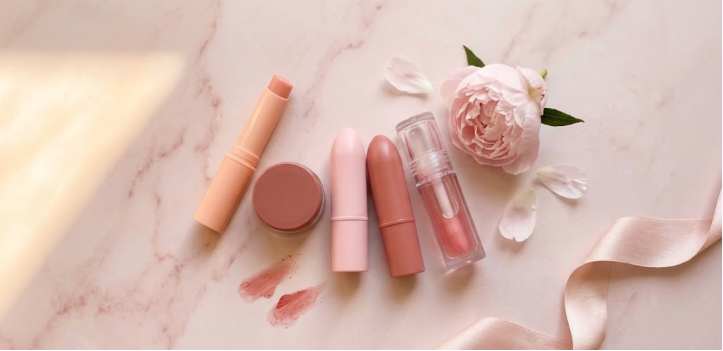
The Best Drugstore Tinted Lip Balm Options Right Now
Now that the format distinction is clear, here’s where the drugstore balm category actually delivers. These options sit at the $7-$9 price point, and they’re the best drugstore tinted lip balm picks for shoppers who want the wax-emollient cling, buildable color, and longer wear that a true balm format provides.
e.l.f. Glow Reviver Melting Lip Balm
This is the standout drugstore option. Shoppers have described it as putting Rhode and Summer Fridays “out of the park,” citing color payoff that exceeds Summer Fridays at a fraction of the cost, with a generous fill (SheKnows). The finish is glossy, the formula is moisturizing, and the shade lineup covers six options that work for light and medium skin. Available at Ulta and Target.
If you’re after the prestige look at drugstore prices, start here.

- BUTTERY TINTED LIP BALM: Long-lasting nourishing lip balm with a buttery soft formula.
- BUILDABLE COLOR AND SHINE: Adds a wash of buildable color (choose from delicious shades) and a glossy finish.
Last update on 2026-10-20 / Affiliate links / Images from Amazon Product Advertising API
(As an Amazon Associate, we earn from qualifying purchases.)
Milani Lip Balm
The finish is glossy, the tint builds with a second coat, and the formula behaves like a balm with a slightly thinner feel than the e.l.f. The shade range is more limited, but the per-product cost makes it easy to try multiple shades without overcommitting. Available at Walmart and Walgreens.
For testing the trend without committing to even a $9 spend, this is the entry point.

- Loaded with cooling and tingling lip-loving ingredients, this high-comfort, cushiony balm instantly gives you full, pillowy lips
- Moisture-rich Mango butter, Vitamin E, and a blend of oils add nourishment
Last update on 2026-10-20 / Affiliate links / Images from Amazon Product Advertising API
(As an Amazon Associate, we earn from qualifying purchases.)

Best Tinted Lip Balm for Deeper Skin Tones
The shade question is where most tinted lip balm roundups fall short. A “sheer wash of color” reads completely differently on fair skin with pink undertones than it does on deep skin with rich neutral or warm undertones. Calling a balm “universal” without testing it across the full range is a marketing decision, not a product description.
Here’s the shade guidance the best drugstore tinted lip balm picks earn or fail on.
Fair and light skin (with pink, cool, or neutral undertones). Cool pinks, soft rose, and rose-mauve shades build the cleanest finish. Warm corals can lean orange-y on cooler undertones and pull the lip color too far from neutral. The e.l.f. Glow Reviver in pinker shades and Milani Color Fetish in soft rose work reliably here.
Medium and tan skin. This is the broadest shade flexibility tier. Warm pinks, mauves, soft berries, and brick reds all build visible color without ashy cast or invisibility. Most of the prestige picks have a warm-rose or peachy-nude option in their lineup that performs well across the medium range. The drugstore balm equivalents perform similarly.
Deep skin. Cool blue-pinks and pale nudes can read ashy or near-invisible. Warm nudes, mauves, and berry shades build the most visible color. A reader on Sephora’s community forum summarized the shade hunt directly when asking for “tints that complement deep skin tones.” A creator testing drugstore options on TikTok noted while swatching: “Lets see how they look on brown skin. Tbh this may be better than summer fridays.” Look for shades described as warm rosewood, plum, or berry rather than “blush” or “petal,” which often translate as cool-tone.
Very deep skin. The high-confidence shade range here is brick red, deep berry, plum, and warm cocoa nudes. Cool sheers and pale nudes underdeliver on this skin tone almost universally. Where a balm doesn’t offer a deep enough shade in its standalone lineup, layering it over a complementary lip liner brings the color into the visible range. This is also where prestige tier products with broader shade architecture, like Nars Afterglow, sometimes outperform drugstore options that haven’t expanded their shade range yet.
A reminder we owe readers: comprehensive shade testing across the full skin tone range hasn’t been completed for every product listed in this article. Where shade guidance is based on community-reported results, formula analysis, and editorial swatch documentation rather than independent in-house testing, that limitation is real. For deeper skin tones specifically, testing in person before committing to a full purchase remains the most reliable path.
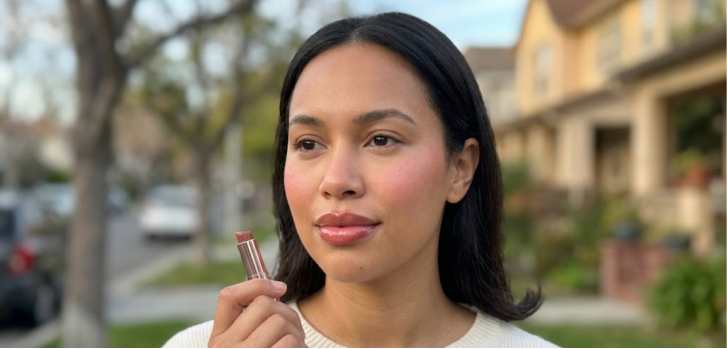
How to Actually Get the Glazed Look With Tinted Lip Balm
Most roundups on this topic stop at product names. That’s why the balm ends up looking like a conditioning treatment rather than the glazed finish you were after. The formula is only part of the result. The layering technique is the other half.
Tinted lip balm is a wax-emollient formula. When applied thick in one pass, the tint disperses unevenly across the lip surface and the gloss finish flattens. When applied in two thinner coats with a pause between them, the first layer creates a lightly set base that the second coat builds on. That sequence produces both the color depth and the high-gloss shine.
Step 1: Prep dry lips before application.
A quick pass of plain lip balm one or two minutes before application creates an even surface. Dry lips absorb tinted lip balm unevenly, which breaks up both the pigment and the gloss finish. If you have any dry patches or rough texture at the lip border, address those first.
Step 2: Apply the first coat in a centered, patting motion.
Start at the center of the lower lip and press outward toward the corners using a patting motion rather than a drag. A dragging stroke moves too much product in one pass. The patting motion deposits a thin, even layer across the lip surface. The result at this stage should look like a light tint with minimal gloss, closer to a sheer stain than a finished lip.
Step 3: Wait 30 seconds.
Set a timer if you need to. The first layer needs to slightly set before the second coat goes on. If you apply the second coat immediately, both layers slide together and you lose the depth the layering was meant to create. This is the step most people skip, and skipping it is the reason the result looks flat instead of glazed.
Step 4: Add the second coat the same way.
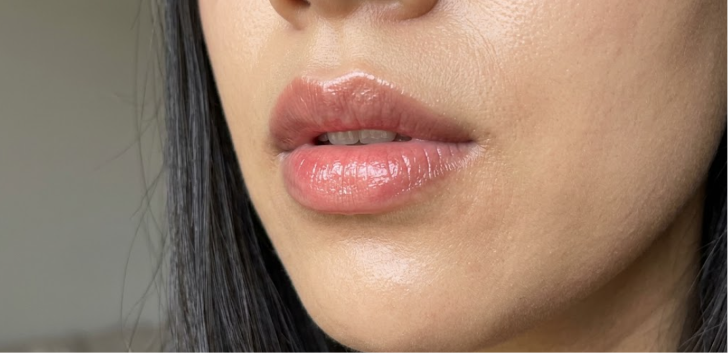
Same motion, same center-outward pat. The slightly set first layer now holds the second coat in place rather than letting it slide. The result should be visibly deeper in tint and noticeably glossier, closer to the glazed finish you’ve been seeing in the reference images.
Step 5: Finish with a thin layer of clear gloss on top (optional).
If you want maximum shine, a thin layer of clear gloss over the two tinted coats amplifies the reflective finish without changing the color. Apply lightly down the center of both lips and let it spread naturally.
Where the Tinted Lip Balm Technique Breaks Down
The technique breaks in predictable places. Knowing the failure modes ahead of time is faster than learning them by repetition.
- Applying to dry lips without prep. The tint sits unevenly in the dry patches and the finish reads patchy across the lip surface, with the glaze you were after looking closer to crackle than to glass.
- Skipping the pause between layers. Both coats slide together, so the pigment goes patchy and the gloss finish flattens. The 30-second pause isn’t filler. It’s the actual technique.
- Choosing a shade too cool for your skin tone. If the first application looks washed out or slightly grey on your lips, go one shade warmer. This applies on fair skin with pink undertones where cool sheers can flatten the natural lip color, and especially on deep and very deep skin tones where cool sheers can disappear into invisibility.
- Expecting the drugstore tinted lip balm to replicate skincare benefit. Rhode’s peptide formula earns its price for skincare reasons. For color and gloss, the $9 option is competitive. For conditioning actives, the drugstore tier isn’t trying to compete, and asking it to is unfair to the formula.
- Treating a tinted lip oil the way you’d treat a balm. Oils don’t need the 30-second pause because there’s no wax layer to set. A single coat usually deposits the visible color you’re after, and a second coat on an oil often slides off the first or feels heavier than the finish you wanted. Match the technique to the format.
The Bottom Line
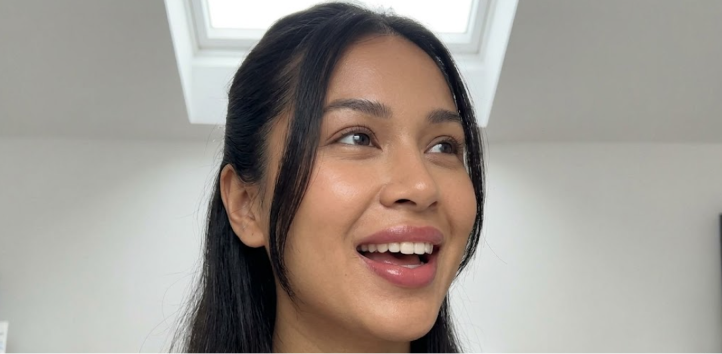
Tinted lip balm earns its place as 2026’s recession beauty trend because it solves a real problem. The glazed lip look became a mainstream finish right as the economy gave people a reason to stop paying $24 or $28 for it. The best drugstore tinted lip balm picks have caught up on color payoff and gloss. They haven’t caught up on conditioning actives, and pretending otherwise would be a disservice to anyone who actually needs barrier repair in their lip routine.
If your lips are healthy and you want the trend finish, the $9 option gets you there. For chronically dry or damaged lips, the prestige formula’s skincare ingredients justify the price difference. Both answers are correct depending on what you’re walking in with.
On format: balm or oil isn’t a winner-loser choice. Wax-emollient balms give you longer wear and buildable color per coat. Tinted lip oils give you a glossier, weightless feel that fades faster. Knowing which one is in your hand changes how it should be applied and what you should expect from it.
For deeper skin tones, warm shades read more clearly than cool sheers. Where a brand hasn’t extended its shade architecture into the deeper range, the gap is real and worth flagging before purchase, not after.
What neither price point can execute for you is the layering technique itself. Even a lip product purchased at a mass retailer carries a “treat mindset” (Glossy), but a treat that sits flat because you skipped the 30-second pause between coats isn’t delivering what you paid for at any price. The whole technique amounts to two thin layers with a pause between them, and that’s what separates the glazed look from a conditioning sheen.
FAQs
What is the best drugstore tinted lip balm in 2026?
e.l.f. Glow Reviver Melting Lip Balm ($9) leads on color payoff and shade range based on community testing and editorial review. Milani Color Fetish ($7) is the lower-cost option with a solid formula. Both are wax-emollient balms and behave the way a balm format should, with longer wear and buildable color per coat.
Is a drugstore tinted lip balm as good as Rhode, Summer Fridays, or Nars Afterglow?
e.l.f. Glow Reviver Melting Lip Balm ($9) leads on color payoff and shade range based on community testing and editorial review. Milani Color Fetish ($7) is the lower-cost option with a solid formula. Both are wax-emollient balms and behave the way a balm format should, with longer wear and buildable color per coat.
Why is tinted lip balm the recession beauty trend of 2026?
The glazed lip look went mainstream through social platforms, and economic pressure pushed buyers toward affordable alternatives that deliver the same visual result. Even a lip product purchased at a mass retailer carries a “treat mindset” (Glossy), which is part of what sustains this category even when spending tightens elsewhere. At $7-$9, tinted lip balm sits at exactly the price point where the recession beauty trend logic plays out most clearly.
What is the lipstick index?
The lipstick effect is the hypothesis that when facing an economic crisis, consumers become more willing to buy less costly luxury goods (Wikipedia). In 2026, tinted lip balm fits that pattern. Buyers are moving away from $24-$30 prestige options toward $7-$9 drugstore versions and treating that move as a savvy outcome rather than a compromise.
How do I build more coverage with tinted lip balm?
Apply the first layer in thin, center-focused pats, wait 30 seconds, then apply the second layer the same way. A clear gloss on top adds maximum shine. The pause between layers is what creates buildable depth. Without it, both coats behave as one and the finish stays flat.
Does tinted lip balm work the same way on deeper skin tones?
Cool-toned sheers can read ashy or near-invisible on deeper skin. Warm nudes, mauves, and berries build visible color most reliably across medium, deep, and very deep skin tones. Where comprehensive shade testing across the full skin tone range hasn’t been completed for a given product, that limitation is noted in the article above.
Is tinted lip balm the same as tinted lip oil?
No. A tinted lip balm is a wax-emollient base that builds color and clings longer. A tinted lip oil is a wax-free liquid base that feels weightless and self-spreads with a glossier shine. The finishes look similar enough that the 2026 trend cycle collapsed both under one label, but they wear differently and you’d pick between them based on what you want the product to actually do.
What’s the best tinted lip balm for deeper skin tones?
Warm-toned shades from the prestige tier still tend to have the broadest range. Nars Afterglow in deeper warm shades and Summer Fridays in cocoa or berry tones perform reliably. At the drugstore tier, e.l.f. Glow Reviver in deeper warm rose builds visible color on most medium-to-deep skin. For very deep skin tones, layering a balm over a complementary lip liner brings the color into the visible range where the brand’s standalone shade lineup falls short.
Is Neutrogena Hydro Boost Tinted Lip Oil a dupe for Nars Afterglow?
It overlaps on the aesthetic result, but it isn’t a one-to-one dupe. Hydro Boost is a tinted lip oil. Afterglow is a balm. The wear curves and pigment vehicles are different. If you want a true balm dupe for Nars Afterglow, the e.l.f. Glow Reviver is the closer drugstore match. Hydro Boost is the drugstore reach for the lip oil category specifically.
Quick Poll
Why did you vote that way? Drop your take below.